
Music, along with turkey, trees and tinsel, is an integral part of Christmas in the 21st Century. Carols such as Away in a Manger and Good King Wenceslas, and classic songs such as White Christmas and Jingle Bells, are part and parcel of the festive season. From traditional candle-lit carol services at Kings College in Cambridge, to singing carols at school or rooting for your favourite pop song to be Christmas No. 1 in the charts, music is all around. But have Christmas and music always been so intertwined? Where - and when - did today's traditions begin?
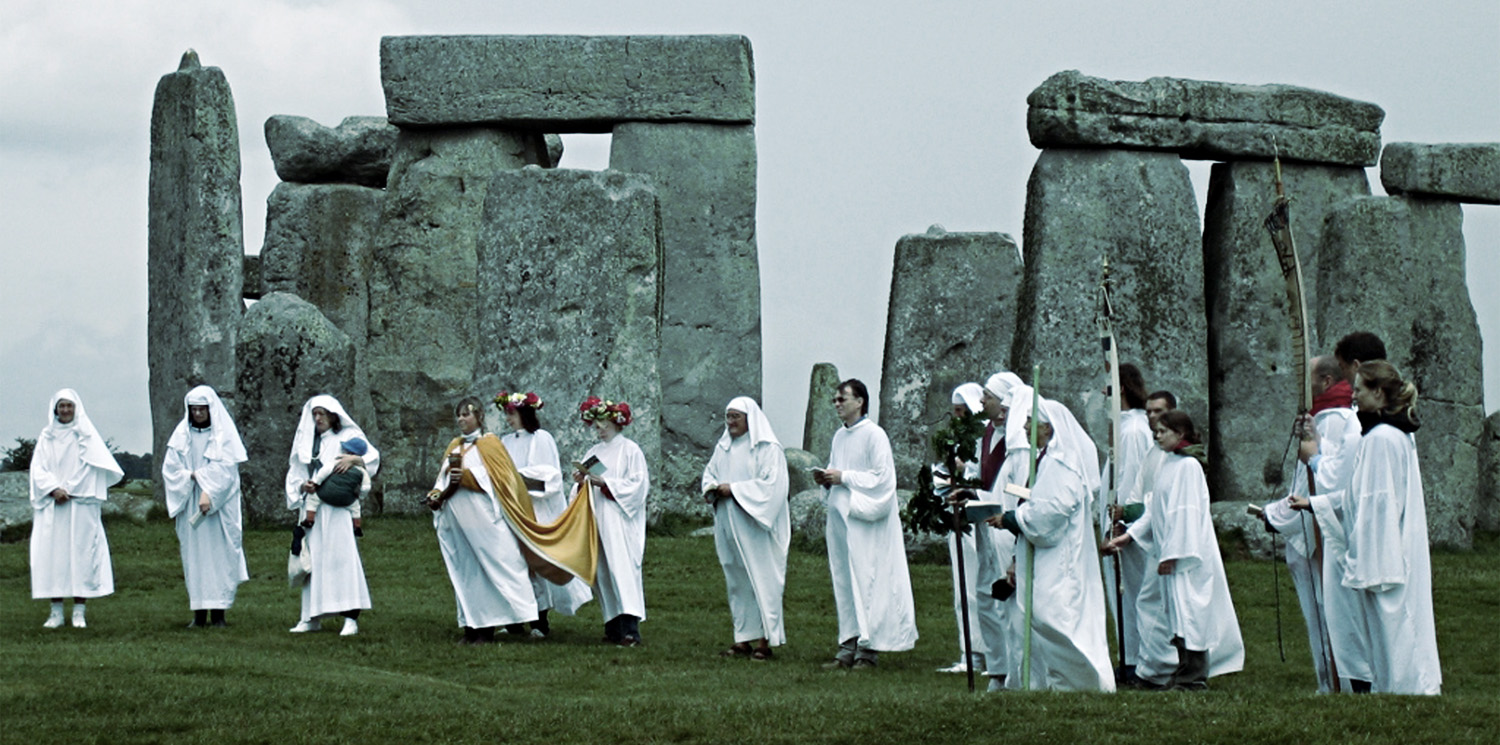
Neo-Druids performing a ritual at Stonehenge in Wiltshire, England
Long, long before the birth of Christ and the beginnings of Christianity, winter already played host to festivities in Britain and continental Europe. In the pagan world, the winter solstice - the day of the year with the fewest hours of daylight (usually taking place on December 21st) was hugely significant. One of the Celtic fire festivals, 'Yule' (also called 'Mother-Night' and Koleda') took place on the long night of the solstice, marking the gradual return of the light to the world. To mark the occasion - and perhaps to ensure that light and warmth did return, ritual dances, chants and songs were performed - and ceremonial drumming may have been used to encourage the rise of the sun. So, whilst we may never know those songs, verses and rhythms, music already played a vital role in the darkest days of the year.
For today's modern pagans, including Neo-Druids and Wiccans, the Yule festival is still celebrated on the winter solstice - and music continues to play a part. In some covens, a ceremonial battle between the holly king (representing winter) and the oak king (representing summer) is re-enacted by two men, wearing a crown of holly and a crown of oak respectively. Throughout the ritual, drumming and chanting are used to encourage the oak king and to wake the sun from its slumber.
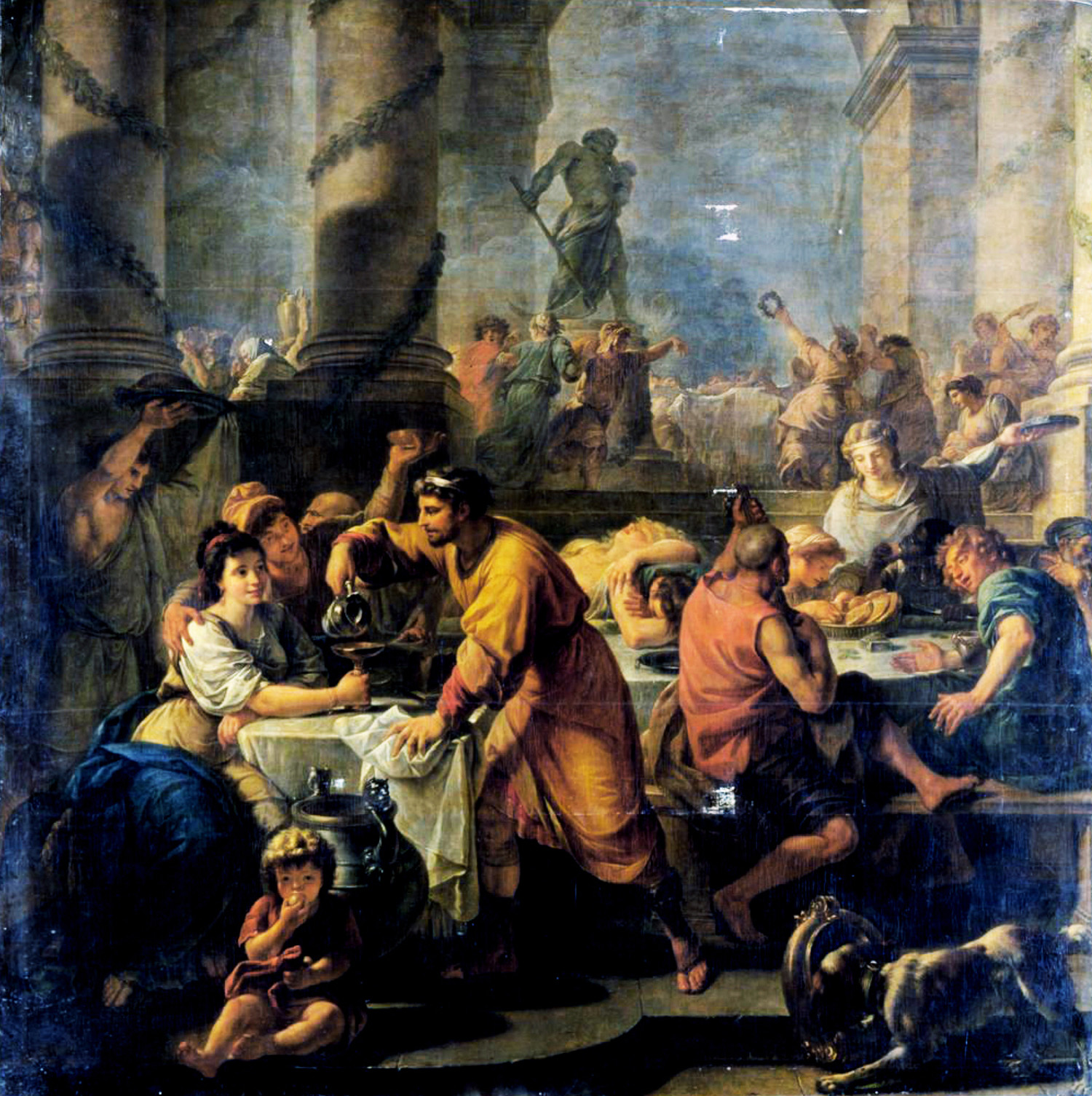
Antoine Callet's 1783 depiction of how the Roman festival of Saturnalia may have appeared
For pre-Christian Romans, winter in the Empire was a busy time for festivities. Saturnalia, celebrating Saturn, the harvest god (or god of 'agriculture and plenty') took place around 17th December with gift-giving and feasts hosted by the wealthy for their poorer neighbours. The festival 'Dies Natalis Solis Invicti' ('Birthday of the Unconquered Sun') is believed to have taken place on 25th December - close to the winter solstice (though this has been contested as coincidental); the title Sol Invictus referring to several Roman sun deities.
New Year's Eve was also celebrated by the Roman Empire, originally in dedication to the two-faced god Janus, after which the month of January is named. Able to look both backwards and forwards in time and space, Janus' festival incorporated torchlit processions, gift-giving, fortune-telling - and lots of songs. Possibly seeding the idea for today's Christmas trees and wreaths, Roman families would decorate their homes with greenery - including fir branches and holly - to symbolise and encourage new life.
In Judaism, Hanukkah - the Festival of Lights - celebrates the rededication of the Second Temple of Jerusalem in the 2nd Century BC -and thus the restored freedom of the Jewish people to worship as they wished. Accompanied by songs and readings, Hanukkah typically takes place around December.
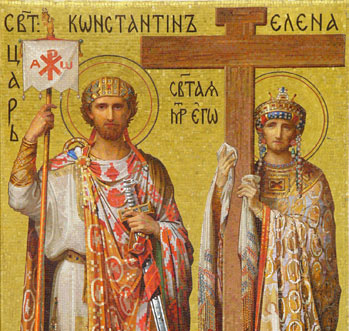
A mosaic depicting Roman Emporer Constantine and mother Helena, in Saint Isaac's Cathedral, Saint Peterburg, Russia. Constantine was widely credited for beginning the conversion of the Roman Empire to Christianity.
It's unlikely we'll ever know with certainty the actual day of Jesus' birth - scholars have suggested dates ranging from September to March - but we can be fairly sure that the early Christian Romans chose to piggy-back on the existing pagan winter festivals as a way to aid conversion of the populous. Music was integral to that conversion; as an opportunity to teach and spread the word of Christian Rome, Christian songs were written to add to the pagan ones - and to gradually replace them.
Music was also being written for the church itself. Records show that in the year 129 AD, a song referred to as the 'Angel's Hymn' was to be sung at a Christmas service in Rome, while, more than a century later, records show that St Ambrose of Milan wrote music for the season of Advent. One piece by St Ambrose, Veni Redemptor Gentium ('Come, Redeemer of the Nations'), appears to be an anti-arianism political statement, urging the church to embrace the idea of equality in the Christian Trinity and therefore the divinity of Christ - an idea which was controversial at the time.
A modern performance of Léonin's Introït Tropé: Puer Natus Est - an astonishing example of early sacred Christmas music
But as Christianity took hold across the known world, the pagan traditions gradually faded - and with them, the ritual celebrations and songs. By the early middle ages, Christmas had instead become a time for quiet contemplation and prayer, largely ignored by ordinary people. (The Epiphany on 6th January - celebrating the visit of the Magi to the newborn Jesus - was a more lively occasion.)
And so, music - so effective in converting the earlier pagan festivals - had lost its significance to Christmas. But, after Comas of Jerusalem composed a hymn for the Christmas service of the Greek Orthodox Church in 760, we see many composers across Europe follow suit. Unlike today's carols, these sacred hymns were almost always written in Latin - making them the preserve of the church and inaccessible to most ordinary people.
That's not to say they were without merit; far from it. In the 12th Century for example, the Ars Antiqua style of composition led by composer Léonin, was taking place within Paris' Notre-Dame Cathedral. One extraordinary piece, Introït Tropé: Puer Natus Est, was part of Léonin's Christmas mass and is still studied by musical scholars and performed today.
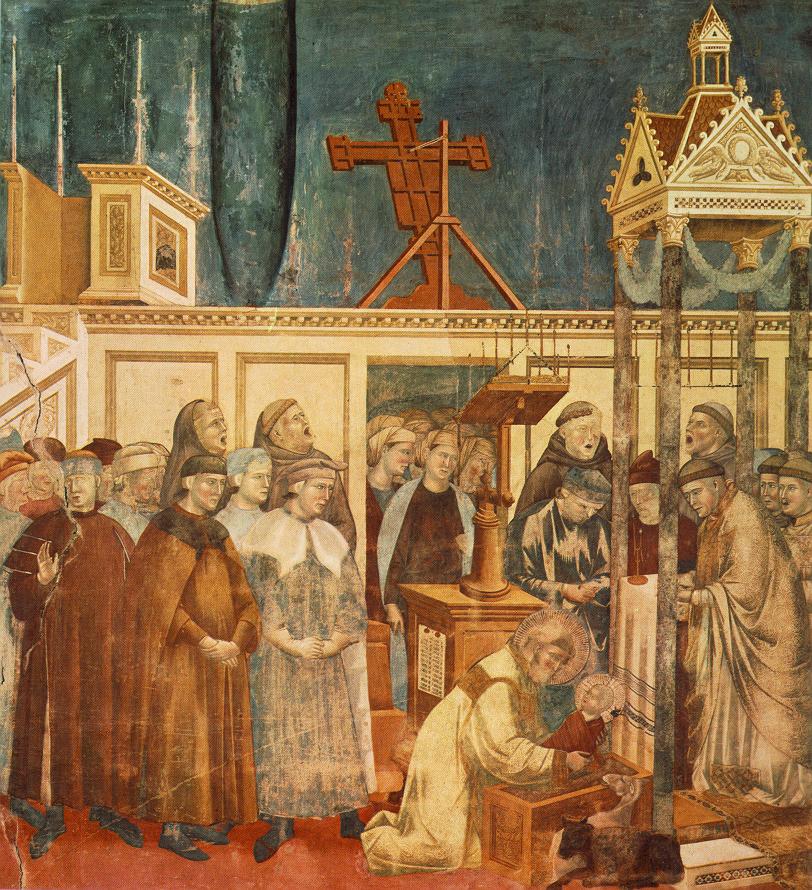
A 1295 fresco by Giotto, in the Upper Basilica of St Francis of Assisi, depicts a Nativity scene being held by St Francis at Greccio
In 1223, St Francis of Assisi may have begun the tradition of the 'Presepe' - the telling of the Nativity story. In humble surroundings (including a cave in the Italian town of Greccio), St Francis reportedly used a combination of props and song to teach the Nativity story to onlookers. Whilst songs were occasionally in Latin or included some Latin lines, more often than not they were performed in the local language - meaning that ordinary people could understand them, remember them and sing them. The Presepe tradition, with its growing number of Nativity songs, spread across Europe and Christmas eventually became the most prominent religious celebration.
'Carols' (meaning songs of praise and joy) once again became a vital part of Christmas. Some were purely religious - many reflecting the growing Christian devotion to the figure of Mary, with verses describing and rejoicing in her purity. Others seemingly reflected older pagan beliefs and superstition - the apparently literal Boar's Head Carol may be referring to offerings to ancient gods of farming, in exchange for a good harvest.
Most carols, however, relate to the Nativity story - albeit loosely and often tenuously; a fragment from 1410 seems to describe Mary and the baby Jesus meeting various people in Bethlehem (none of which are in today's version of the story and probably weren't in St Francis' version either). The majority were stories, presumably made for entertainment rather than worship, and were spread from town to town by minstrels. Often changing the lyrics for the town they happened to be in (I Saw Three Ships is an example of this), minstrels' songs were regularly memorised by their audience and therefore continued life well after the minstrels had moved on.
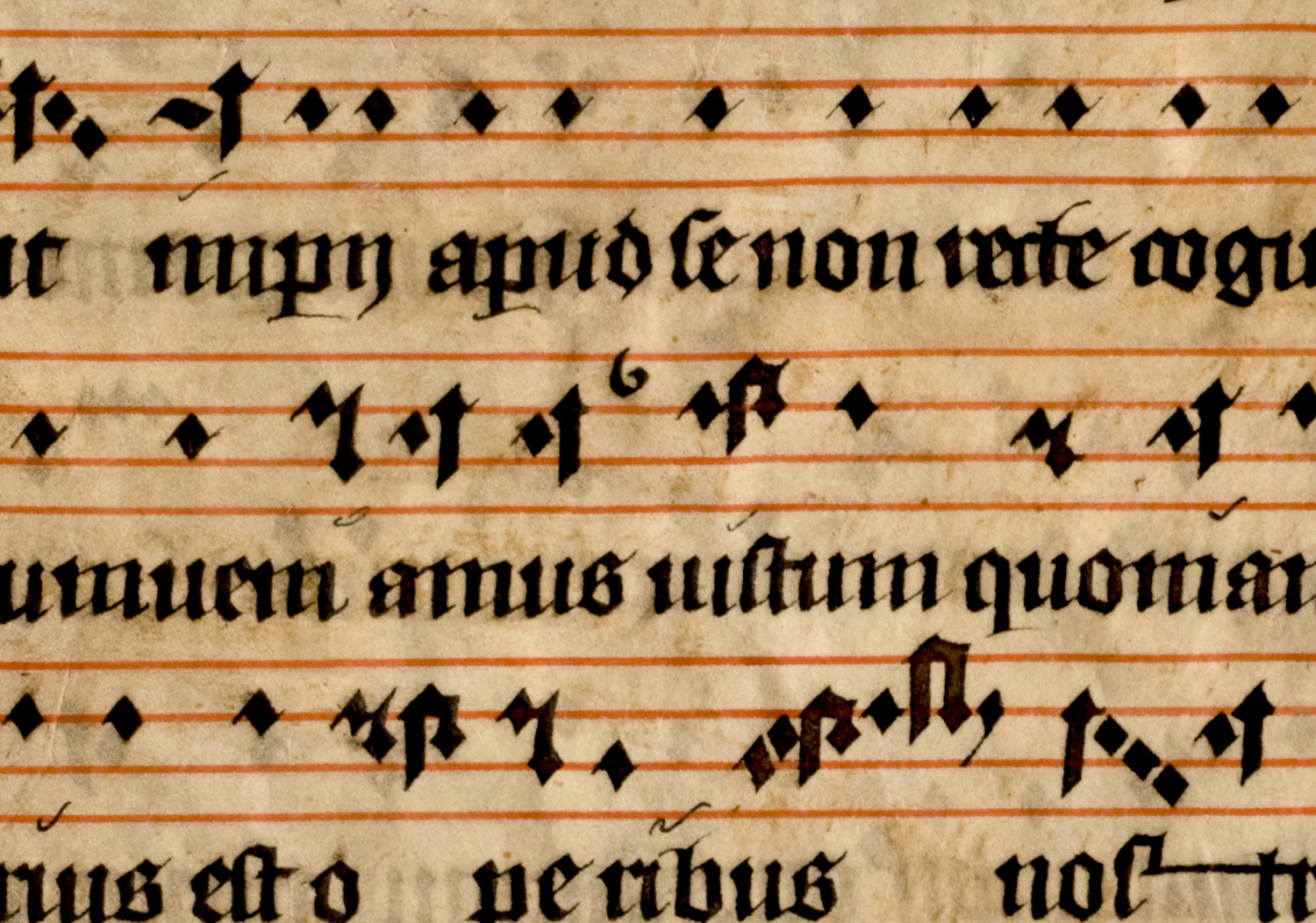
Medieval carols sung today are usually performed with a regular rhythm and diatonic harmonies - reflecting how songs and music are written today. However, originally those carols would often have complex and irregular rhythms and very different, modal harmonies.
Memorisation and paraphrasing from minstrel performances likely paid a significant part in what might be the first written English Christmas songs, the 25 'Caroles of Cristemas' by priest and poet John 'the Blynde' Audelay. A chaplain to Haughmond Abbot in Shropshire, Audelay's works seem to be a mix of both original and plagiarised lines and verses - but with no equivalent to copyright law in the early 1400s, this wasn't a problem. Whilst the original melodies - if they existed - have long been lost, acclaimed modern choral music composer John Rutter has set some of Audelay's verses to music.
As the Medieval period drew to a close, carol singing became an increasingly animated activity - to the point where carol singers were banned from singin inside churches for a short time, due to the disruption they caused to the otherwise calm and reflective Christmas masses. The singers were moved outside of the church and - undeterred - many began the tradition of singing carol singing door to door.
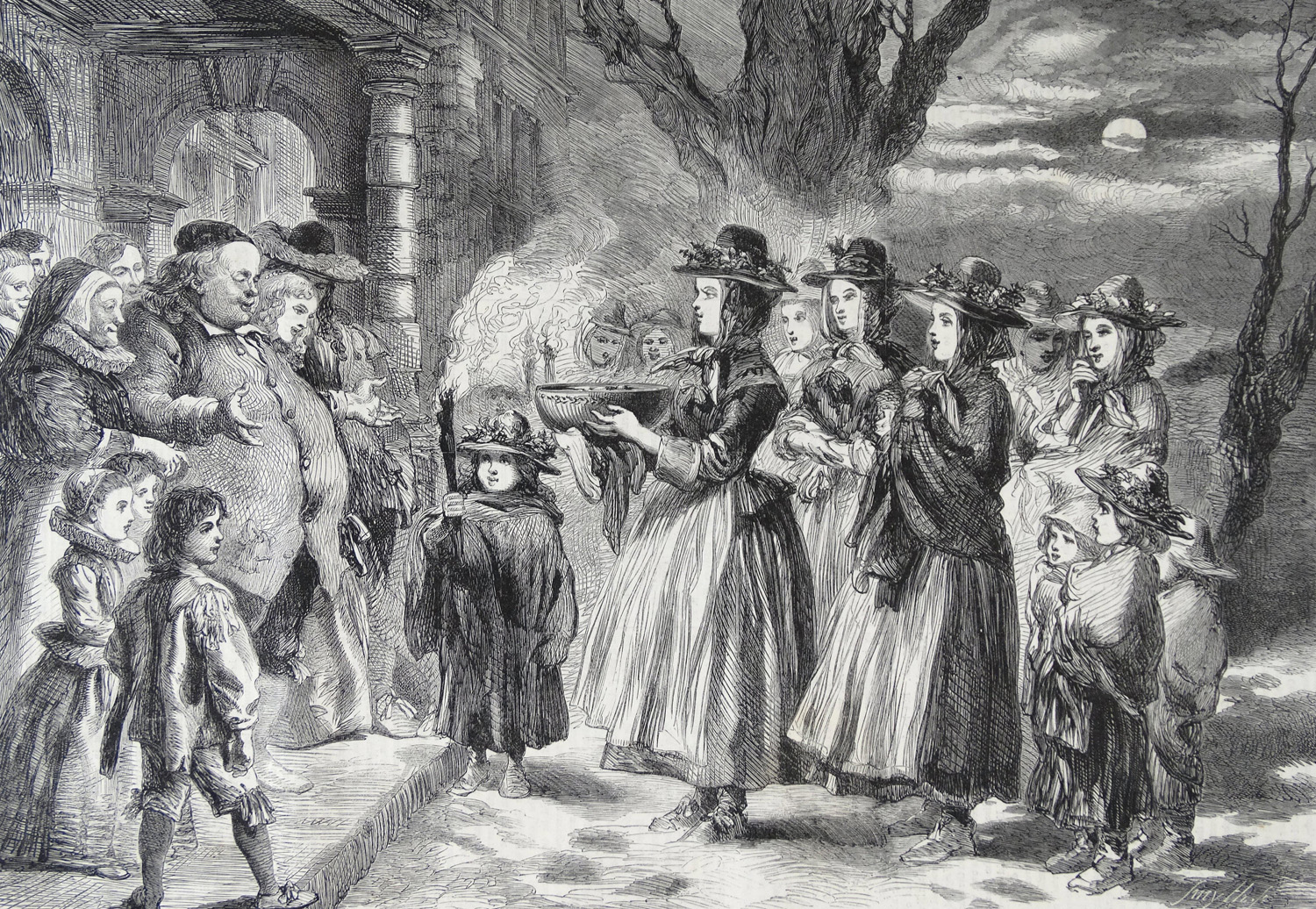
Music also played a part in the ancient and largely forgotten winter tradition of wassailing. Wassailing was the practise of taking a large bowl of drink from door to door, singing to the house owners and offering them drink in return for gifts (often food). This was seen as being distinct from begging, as made clear in the mid-19th Century carol 'Here We Come A-Wassailing'.
Wassailing is also alluded to in the carol 'We Wish You A Merry Christmas' with the lines 'Oh, bring us some figgy pudding' and 'We won't go till we get some'.
The invention of the printing press and its popularisation across Europe and in Britain in the early 1400s was significant - for the first time, information could be quickly and widely dispersed, no longer needing to be copied by hand (which was a hugely labour-intensive and expensive process). The earliest recorded publication of Christmas carols was by London printer and publisher Wynken de Worde, with a 1521 book (which included the aforementioned Boar's Head Carol). Carols continued to rise in popularity, as both a way to celebrate and to spread the Nativity story.
With the rise of Protestantism across Europe and the formation of the Anglican church in England, practising Catholicism in England was prohibited from 1534, intensifying under the rule of Elizabeth I from 1558 and officially treated as treason. (Remarkably, Catholicism wasn't officially permitted until the Roman Catholic Relief Act of 1829 - and even that was hotly contested.) Up until the mid-17th Century, the Protestant Church continued to celebrate Christmas in its own style, however - and, since the majority of the English clergy had simply transferred their allegiance from the Catholic Church, many traditions including Christmas hymns and carols continued to be sung.
The Puritan movement which began in continental Europe in the late 1500s, sought to rid the Protestant Church of any remaining Catholic practises and curtail the excesses and frivolity that remained in the worship of God. The festivals of Christmas, Easter and Whitsun should, in the eyes of the Puritan movement, be times for solemn humiliation and remembrance of Christ rather than a time of noise, joy and carnal pleasures. All three festivals were officially abolished in England in 1644, followed by government policies which sought to enforce the ban after Oliver Cromwell rose to power in England shortly afterwards.
And so, despite initial pro-Christmas riots in England in protest of the ban, and the likelihood that Christmas continued to be celebrated in secrecy for a few years, Christmas and its music faded from public consciousness for almost 200 years.
Despite strong opposition, the evolving political situation in 1829 Britain and Ireland finally led to the Roman Catholic Relief Act - officially ending nearly three centuries of Catholicism being illegal in England.
Whether in response to the act (and the new legality in exploring Roman Catholic customs and traditions), personal interest (as a fellow of the Society of Antiquaries of London) or to capitalise on Victorian Britain's burgeoning fascination with antiquity and history, solicitor William Sandys embarked on a mission to uncover and document any Christmas music stored in towns and villages across England. His mission was a success; his first carol book, published in 1833, included 80 carols (along with a lengthy introduction intended for music scholars and historians; a stripped back version was published without the introduction in 1852). Whilst most of the carols will be unknown to most of us, the book did re-introduce carols which remain popular to this day, including God Rest You Merry, Gentlemen, I Saw Three Ships and Hark The Herald Angels Sing.
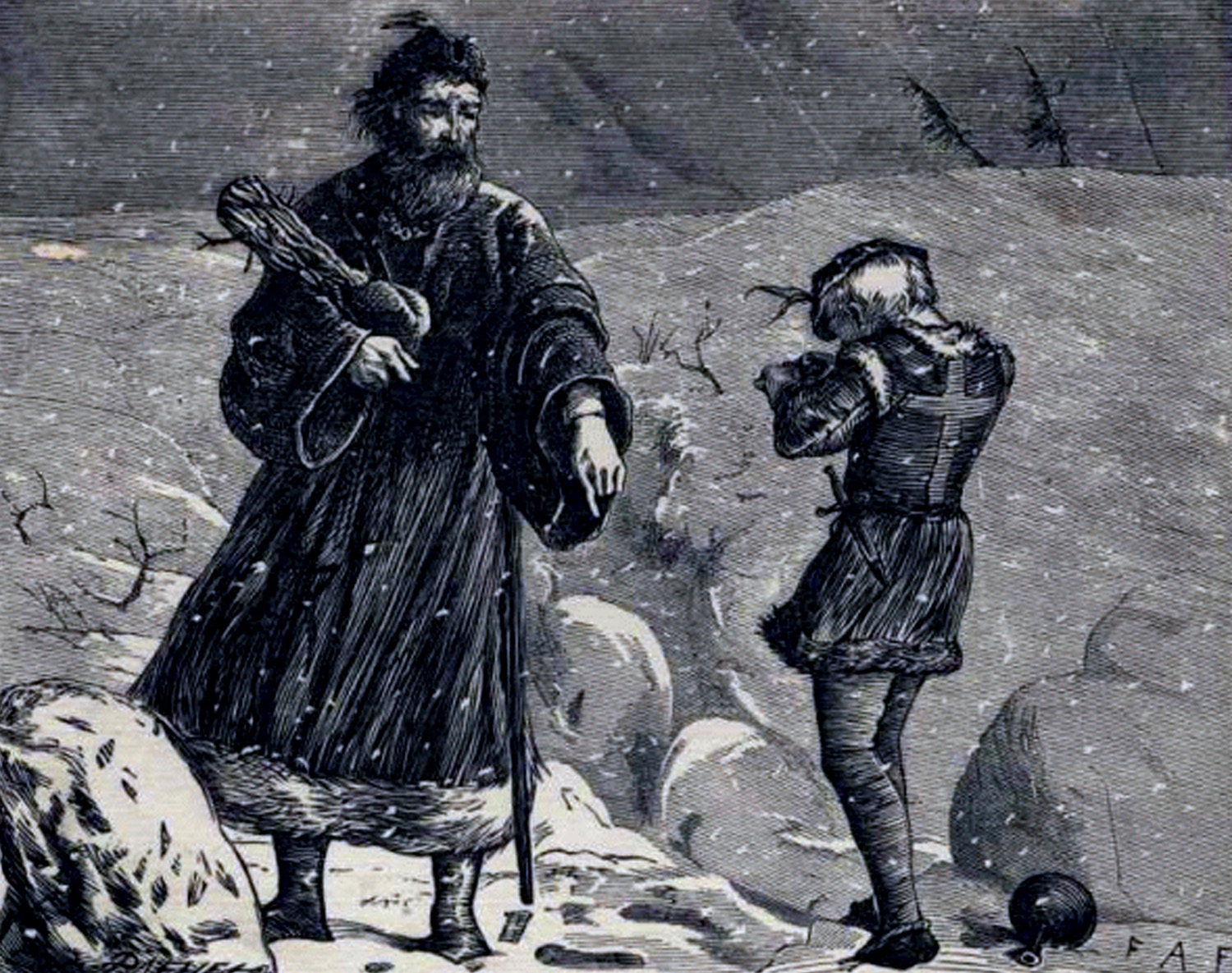
Many of today's best-known English carols were written during the Victorian age, including Good King Wenceslas. Good King Wencelas was created when John Mason Neale, an academic at Sackville College in East Grinstead, put words from a (largely fabricated) 1847 story about Bohemia's King Wencelas by Czech poet Václa Alois Svoboda to the tune of the 13th Century Spring carol 'Tempus Adest Floridum' ('It is time for flowering') - found in an old Scandinavian collection of religious songs called 'Piae Cantiones' dating back to 1582.
Sandys' carol books - along with Charles Dickens' best-selling A Christmas Carol novella - helped galvanise the Victorian idea of the 'Olde English Christmas' and Dickensian versions of some of the old Christmas traditions began to resurface. Sandys' carol books (followed by those of his successor, Davis Gilbert) were bought by the middle classes and by local town leaders, who arranged for official carol singers to sing carols on 'watchnight' or 'waitnight' - the night angels appeared to shepherds as they watched their flocks in the Nativity story, (what we now call Christmas Eve). Hence the singers were known as 'waits' and their singing marked the official start of the Christmas celebration.
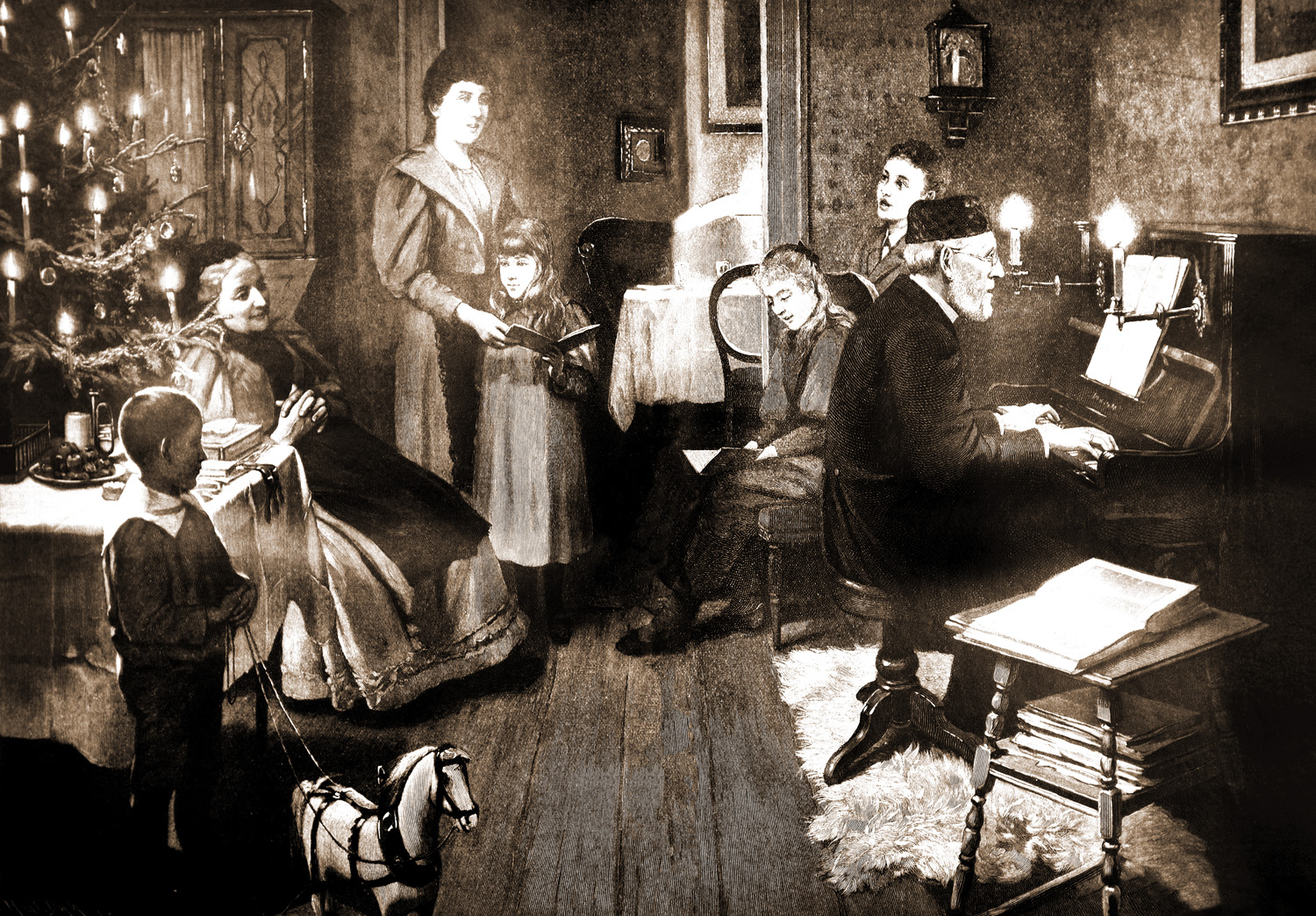
Carol singing as a family in private homes rose in popularity once more - helped by other developments of the Victorian world. The new railway infrastructure, so crucial for the acceleration of industry, also meant that people could more quickly and easily travel to their family home whilst later on, in the 1870s, the introduction of paid leave meant that many workers also had the time to travel. As a result, Victorian family gatherings grew in size and significance.
Victorians were often skilled in musical instrument making and playing. 19th Century Britain and Europe saw an explosion in the number of piano makers (including Chappell & Co who eventually became part of the Kemble and Yamaha families). As a result, most middle-class households had a family piano and most people sang. At the same time, many orchestras and choirs were established, almost all of which put on Christmas performances.
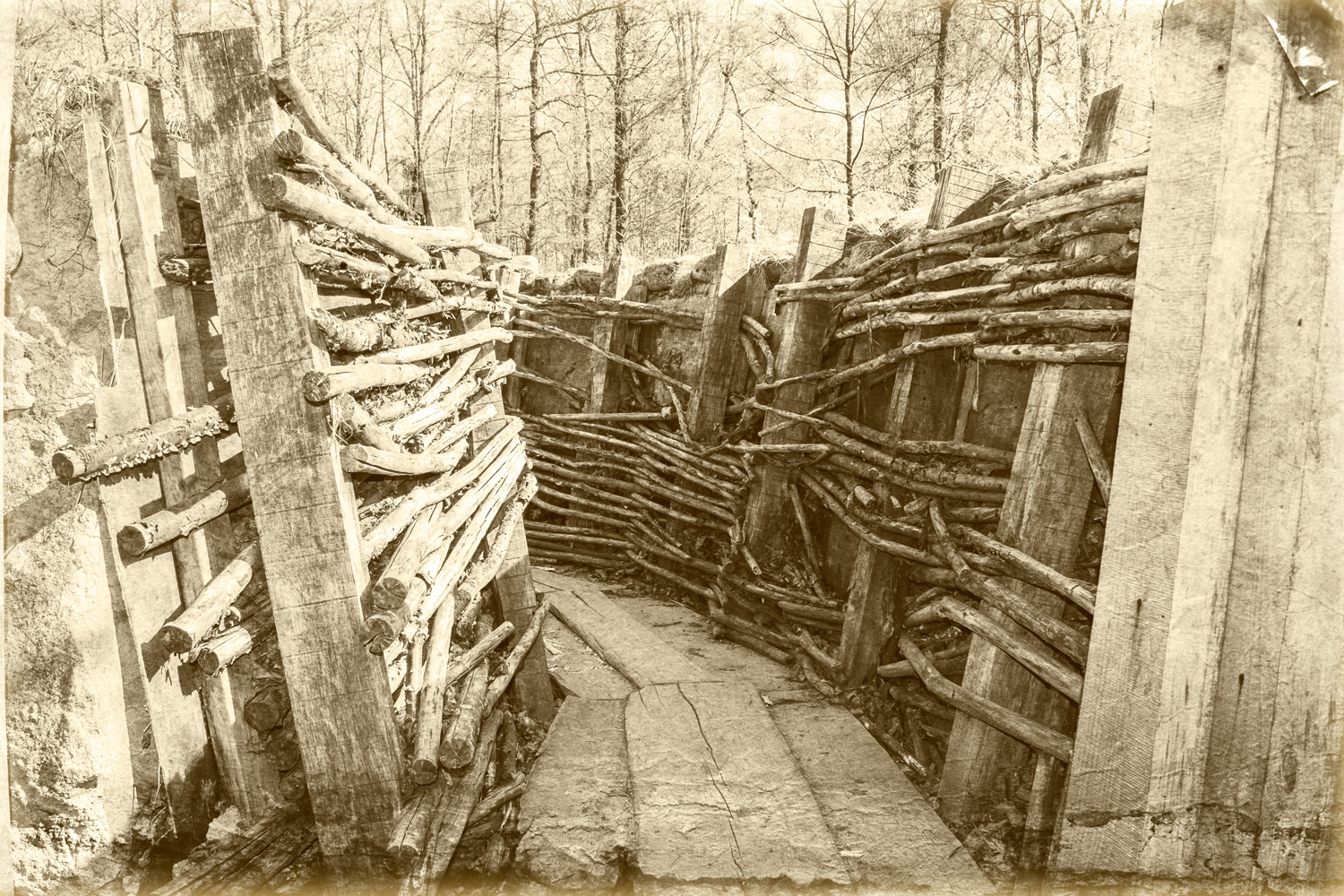
During the First World War, soldiers on both sides of the front line, fed up with the futility of the fighting and the inhumanity of life in the trenches, would occasionally agree small localised ceasefires - sometimes to recover bodies, sometimes to exchange tobacco or simply to experience peace for a brief moment.
The most widespread armistice occurred on Christmas Day, 1914 - five months into the war. Accounts from those serving describe improvised football matches and carol-singing from both sides.
Punctuated by war and its inevitable tragedy, the first half of the 20th Century otherwise continued the path set by Victorian Britain as far as Christmas was concerned. Gift-giving became far more commercialised, with the range of children's gifts available vastly increasing, but - for Christmas songs and carols - there were no significant developments.
That all started to change in the second half of the century. The swift rise of television meant that radio quickly took a backseat for public information broadcasts and dramatic productions. But in time, new forms of TV content became a highlight of the Christmas season - with music often playing a central role. Christmas programming of the 1960s and 1970s, such as the much-loved Morecambe and Wise Christmas Specials, regularly combined music and comedy, whilst made-for-TV films such as The Snowman meant entire soundtracks entered the public consciousness.
And with major Hollywood films regularly shown on terrestrial channels across the festive season (and video players still an expensive luxury), for many people, soundtracks became part of the Christmas experience and tradition. From old and modern Christmas classics such as musicals White Christmas and Tim Burton's Nightmare Before Christmas, to Christmas-themed family films such as Miracle on 34th Street and Home Alone, a film soundtrack can instantly spark our favourite memories of Christmas.
The rise of pop and rock music in the early 1950s led to New Musical Express running a weekly top-12 singles chart, beginning in the 14th November 1952 edition. Inevitably, there would be a best-selling single over Christmas but it wasn't until 1973 - with Christmas songs released by both Slade and Wizard (Slade won the top-spot) that it was considered an accolade. Whilst reality TV singing contests such as Popstars and X Factor didn't begin until the start of the 21st Century, so-called manufactured-pop bands such as the Spice Girls regularly took the coveted Christmas Number 1 spot in the 1990s.
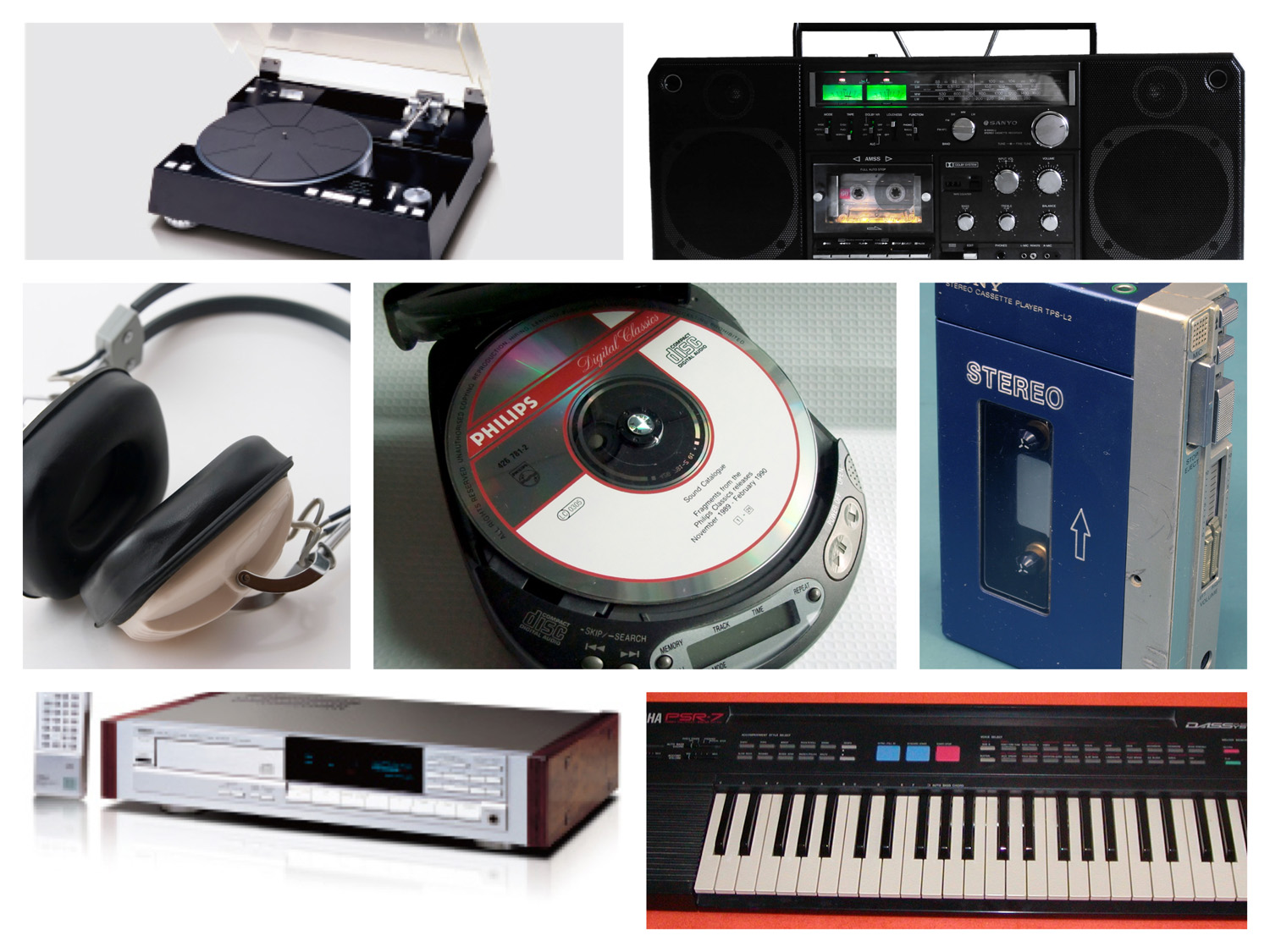
The 1970s and 1980s saw huge advances in music-playing technology - few being as iconic as Sony's Walkman or our own PSR and PSS electronic keyboards.
Walkman photo by Binarysequence; CD player photo by MK2010; ghettoblaster photo by Sorin Mares; headphones photo by PJ
Whilst not specifically Christmas-themed, the 20th Century's advancements in electronics, HiFi and music recording formats meant that many people received gifts of either music players - turntables, HiFi and later ghettoblasters and Walkmans - as well as music on vinyl, cassette and later on CD. In a world where music wasn't instantly available to download or stream, Christmas was often a time when a family's music collection received a significant expansion or upgrade.
At Yamaha, we'd been developing electronic synthesis since the 1960s; by the late 1980s, we began to make small, affordable and portable home keyboards which meant that, for the first time, children, adults and entire families could learn to play organ and piano without needing the significant financial outlay - or space - required by an acoustic piano or two-manual electronic organ. And, as a result, many people in the 80s woke up to find our PSS and PSR home keyboards under the tree on Christmas Day (something that still happens today, though our current PSR Series keyboards are infinitely more realistic now).

Today, the old Christmas traditions still hold; carols and hymns are still sung, Christmas movies still captivate and delight us, and gifts are still regularly music-related. But rather than waiting for the time and day when one of 4 TV channels would show your favourite film or putting a new album on your Christmas list, we can watch and listen instantly on our TVs, tablets, smartphones and watches - wherever we happen to be - using services from Apple, Sky, Amazon, Netflix and Spotify.
Whereas gifts in the past may have included compact HiFis with built-in CD and cassette players, today's equivalent are usually wireless speakers and soundbars with music played from a phone or tablet. And the old PSR keyboards of the 1980s have become musical powerhouses - capable of incredible realism and versatility, whilst still being portable and affordable.

Why not start a new tradition for your family this Christmas? Gather everyone around, switch off the TV (especially as there is no Doctor Who on Christmas Day this year) and enjoy music together. Play tunes from your youth, music from your parents and grandparents generations, play musical instruments, sing, dance and have fun together.
Start a family band, rock around the Christmas tree with grandma and the children. Younger children can get in on the act too; babies and toddlers can start by singing along, rattling a shaker or banging on a saucepan. Start children young and they will grow into confident music makers. Encourage children who are learning to play to bring their instruments along to your house for a special performance. It will be great for their self-confidence. Remember that you are never too young or too old to start to play a musical instrument - and it will make Christmas even more special.