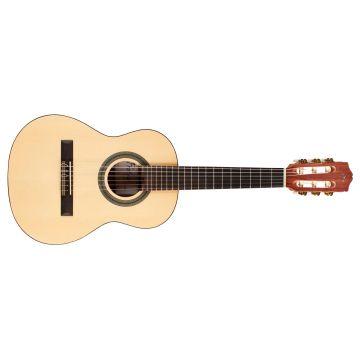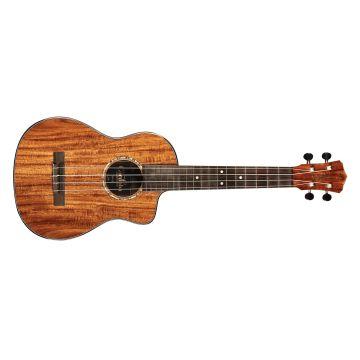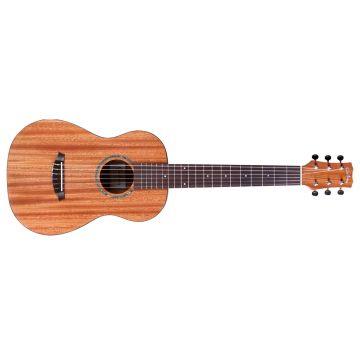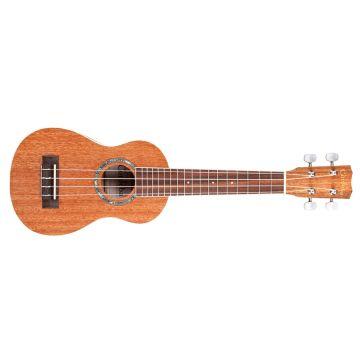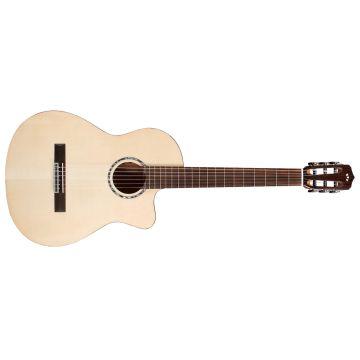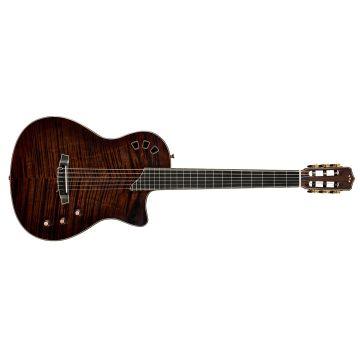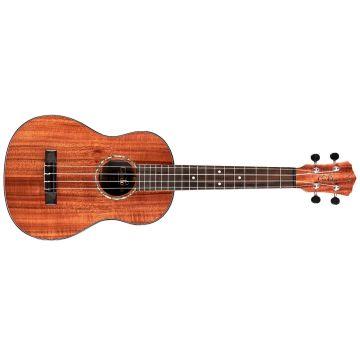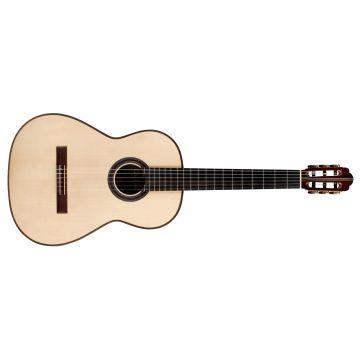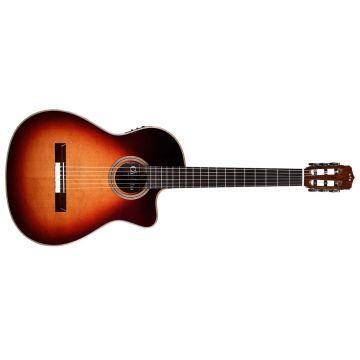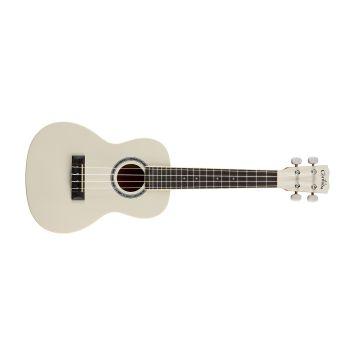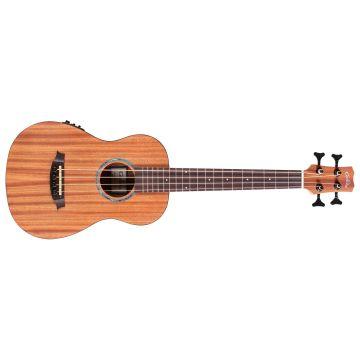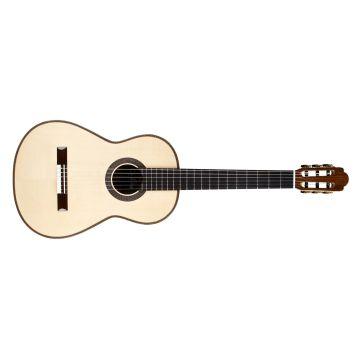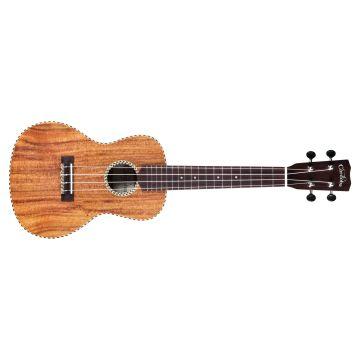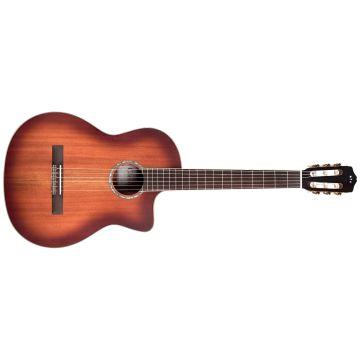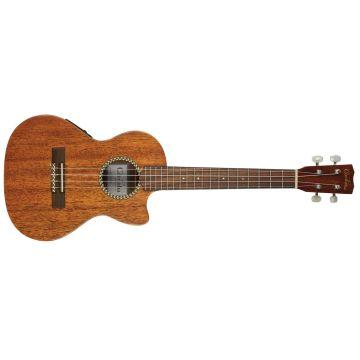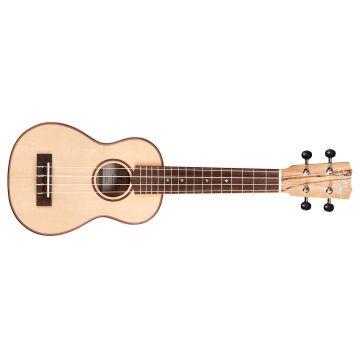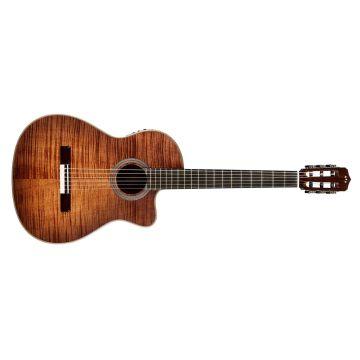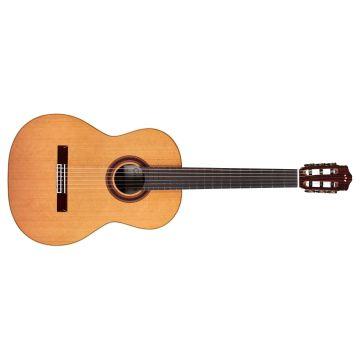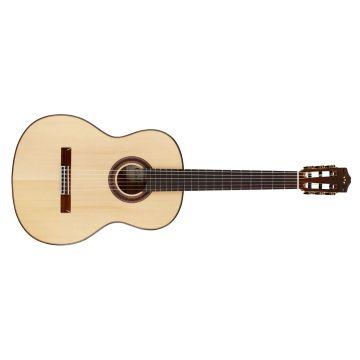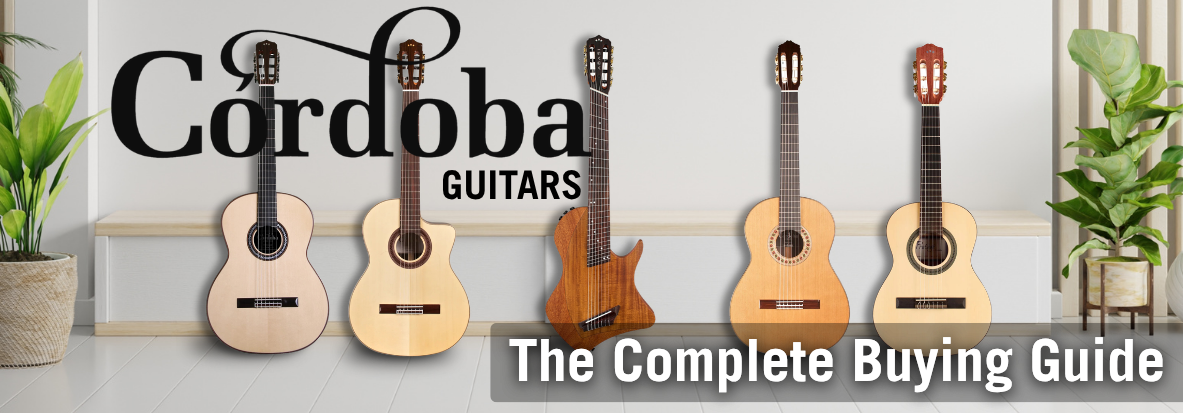
Cordoba is a California-founded guitar brand (1997) specialising in nylon-string classical, flamenco and crossover guitars, hand-built across facilities in the USA, Spain and China. Cordoba has been part of the Yamaha Guitar Group since February 2023, but its guitars are still designed and built by Cordoba's own team, not by Yamaha itself.
Since Yamaha Music London began stocking Cordoba guitars in our Soho showroom and online, we've heard the same questions from customers and our own store team, again and again. So we've put together this guide to answer them properly. They range from questions about quality, ownership, which model to start on, what strings to use, and how Cordoba stacks up against Yamaha's own classical guitars and against Guild.
In this guide
Founded in Santa Monica, California in 1997 by Tim Miklaucic, Cordoba set out to bring the nylon-string guitar to a wider audience without cutting corners on traditional Spanish luthier techniques with solid tops, fan bracing, hand-inlaid rosettes and carved headstocks. That approach has made Cordoba one of the most consistently recommended nylon-string brands at every price point, from first-time buyers to gigging professionals.
Quality varies by series, as it does with any brand that spans beginner to professional instruments, but even Cordoba's accessible Iberia-series models, such as the C5, feature a solid tonewood top rather than the laminate top common on budget classical guitars from other brands. Step up to the Luthier series (C9, C10, C12) and the whole body is solid wood, built to a boutique standard. At the top of the range, the Master Series is handmade at Cordoba's own workshop in Oxnard, California, and the España series is handmade by luthiers in Valencia and Barcelona, Spain. All Cordoba instruments use sustainably sourced, FSC-certified wood.
Where a guitar is built doesn't tell you everything about its quality. Cordoba's Iberia, Fusion, Luthier, Stage and Protégé instruments are manufactured in China to Cordoba's own designs and quality-control standards; the same approach most mid-market guitar brands now take, and it's this combination of Spanish-inspired design with efficient manufacturing that lets Cordoba offer solid-wood construction at prices that undercut many hand-built European guitars.
Ownership vs manufacturing
No, and this is worth being precise about, because the two things are easy to conflate. In February 2023, Yamaha Guitar Group (the US-based guitar division of Yamaha Corporation) acquired Córdoba Music Group, the parent company of both the Cordoba and Guild brands. That made Cordoba part of the same corporate family as Yamaha's own guitars, Line 6 and Ampeg.
But ownership isn't manufacturing. Cordoba guitars are still designed by Cordoba's own team and built at Cordoba's own facilities; Oxnard, California for the Master Series; Valencia and Barcelona, Spain for the España series; and contracted factories in China for the Iberia, Fusion, Luthier, Protégé and Stage series. They aren't assembled on Yamaha's own production lines, and they don't share components or designs with Yamaha's classical guitar range. Think of it the way a car buyer would think of two related-but-distinct marques under the same parent group: same ownership, separate design and build.
Now that both brands sit within Yamaha Guitar Group and both are stocked at Yamaha Music London, this is one of the most common questions our team gets asked in-store and there's no single right answer, because it depends which tier of each range you're comparing.
| Level | Yamaha | Cordoba |
| Entry-level | C40: solid spruce top, laminate meranti back and sides | Protégé (C1): spruce top, mahogany back and sides, smaller scale-length options for young learners |
| Core / beginner-intermediate | CG series: solid tops on most models, with back and sides in ovangkol or rosewood depending on model | Iberia series (C5, C7): solid cedar or spruce top, with mahogany (C5) or rosewood (C7) back and sides |
| Premium / handcrafted | GC series: handcrafted at Yamaha's workshops in Japan and China, all-solid-wood construction | Master Series: handmade in Oxnard, California; España series handmade in Valencia and Barcelona, Spain |
In practice, the two brands feel different in the hands as much as on paper. Yamaha's classical guitars are built to a famously consistent factory standard; trained originally under Spanish master luthiers Manuel Hernandez and Eduardo Ferrer, and are often praised for reliability and even, predictable playability across every unit. Cordoba's guitars, particularly in the Iberia and Luthier series, tend to have a slightly more individual character and a warmer, more resonant voice, with more tonal variation model to model. Neither is objectively "better", it comes down to what you want from the instrument, and it's exactly the kind of difference our Soho showroom is set up for you to hear side by side.
Cordoba's catalogue can look bewildering from the outside, so here's how it breaks down:
Every model in this range can be tried in person in our Soho showroom before you buy, which is genuinely useful here, since nylon-string guitars vary more in neck width and tension feel than steel-string guitars typically do.
This is the single most common question our store team gets asked about Cordoba, so it's worth answering properly rather than just pointing at the cheapest option.
Protégé C1 vs Iberia C5
The Protégé C1 is Cordoba's true entry point; a spruce top with mahogany back and sides, built to a simpler specification than the Iberia range. It's a sensible choice in three situations: buying for a young child who needs a smaller scale length, buying for someone testing whether they'll stick with the instrument before investing further, or working to a strict budget.
For most adult beginners, though, we'd point you to the C5 instead. The step up from spruce to a solid cedar top makes a real, audible difference, it has a warmer, richer tone with more sustain and because the guitar has room to open up as your technique improves, it's less likely you'll outgrow it within the first year. The price difference between the two is modest relative to how much more guitar you get, which is why the C5 is Cordoba's most consistently recommended beginner model.
C5 vs C7: is the step-up worth it?
The C7 is explicitly built as "a step up from the C5"; this is Cordoba's own description of the model. Both share a solid cedar (or spruce) top and the same traditional fan bracing, but the C7 swaps the C5's mahogany back and sides for rosewood, which generally produces a louder, fuller sound with more low-end warmth and clearer separation between notes. You'll also find a two-way adjustable truss rod and slightly more premium appointments (hand-inlaid rosette, gold tuners) as standard.
Our honest guidance: the C5 is an excellent instrument that will serve most beginners well for years. The C7 is worth the extra outlay if you're already fairly confident you'll stick with classical guitar, want a guitar with headroom to grow into as your ear develops, or simply prefer a bigger, more resonant sound from day one. If you're not sure, this is exactly the kind of decision that's much easier after five minutes playing both side by side in our showroom.
Because Cordoba's range spans several distinct product families, it covers a genuinely wide stylistic range:
One of the most interesting instruments in Cordoba's current range, and one our store team gets asked about often, is the Stage. This is Cordoba's purpose-built electro-classical guitar for live performance.
Full-depth classical guitars are notoriously prone to feedback once you push them through a PA at any real volume, because the large hollow body resonates with the sound coming back out of the speakers. The Stage solves this with a thinline, chambered mahogany body roughly 38–40mm deep, a fraction of the depth of a standard classical guitar and is capped with a solid spruce top, paired with a pickup system co-developed with Fishman that's specifically engineered for clarity and feedback resistance at stage volume.
It also addresses the second thing steel-string and electric players often find awkward about nylon guitars: the neck. The Stage's Fusion neck is narrower than a traditional classical neck (around 48mm at the nut, versus the traditional 52mm), giving a feel much closer to a steel-string acoustic or electric guitar, which makes the transition far more comfortable for players coming from those backgrounds. Traditional-neck Stage models (52mm, 12-fret) are also available for players who want the amplified performance benefits with a more classical feel.
In short: if you want an authentic nylon-string tone but need it to survive a loud stage without feedback, the Stage is built specifically to solve that problem.
No! This is one to avoid. Classical guitars, including every nylon-string Cordoba, are built with lighter internal bracing designed around the lower tension of nylon strings. Steel strings exert considerably more tension on the top, bridge and neck than the guitar was designed to withstand. Over time, sometimes quite quickly, this can warp or crack the top, pull the bridge loose, or put the neck under stress it isn't built to handle. It's not a reversible mistake once damage has set in.
If what you actually want is a nylon-string guitar that feels more like a steel-string in the hand, the better route is Cordoba's Crossover range, which keeps nylon strings but narrows the nut and reshapes the neck profile to feel closer to a steel-string or electric guitar. And if you genuinely want steel strings with Cordoba's build quality, the brand also makes a dedicated steel-string line built specifically to handle that tension; ask our store team about current availability.
Cordoba's nylon-string guitars ship from the factory with Savarez strings fitted as standard, and Savarez remains a safe, well-matched choice when it's time to restring. That said, you don't need to stay loyal to one brand, most quality classical strings from established makers are built to comparable specifications and will suit a Cordoba well.
Tension matters more than brand. Nylon strings are sold in low (light), normal (medium) and high (hard) tension, sometimes with an extra-high option too:
If you're not sure where to start, normal tension is the right default for the vast majority of Cordoba players. Our classical guitar strings range includes Augustine (low, medium and high tension), D'Addario Pro-Arte (normal, hard and extra-hard) and Savarez, so you can match tension to your guitar and your hands and our Soho team can advise you in person if you bring your guitar in.
It depends on the model, and it's worth checking before you buy rather than assuming. As a general pattern across Cordoba's range: entry-level Protégé models and Iberia-series guitars like the C5 and C7 are often sold with the case or gig bag as a separate purchase, while higher Luthier-series instruments; the C12, for example, include a deluxe hardshell case as standard. Stage-series electro-classical guitars typically include a fitted gig bag, given they're built for gigging musicians who need to transport them regularly.
Because this varies by model and sometimes by which specific finish or bundle you buy, always check what's included on the individual product listing, or ask our team in-store. If a case isn't included, our guitar cases and padded guitar bags range include options sized specifically for classical-body guitars.
A few sensible additions will get more out of a new Cordoba guitar and help protect it:
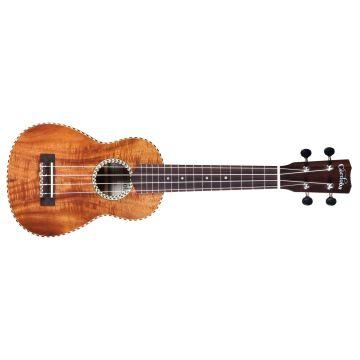
Browse the full guitar accessories range at Yamaha Music London for all of the above and more. And if a Cordoba has got you hooked on the nylon-string sound but you're after something smaller and more portable; for travel, for a child, or simply for fun, it's worth a look at our ukulele range, which shares much of the same warm, plucked-string character in a more compact instrument.
Now that Yamaha Music London stocks both brands, this is a natural question; and the honest answer is that Cordoba and Guild barely overlap in what they build, despite now sitting under the same corporate parent.
Cordoba is a nylon-string specialist: classical, flamenco and crossover guitars rooted in Spanish guitar-making tradition, aimed at players drawn to that particular tone and playing technique. Guild, by contrast, is an American steel-string and electric guitar maker founded in New York in 1952, best known for dreadnought and orchestra acoustics, powerful 12-string guitars, and vintage-styled hollowbody and solid-body electrics rooted in folk, blues, jazz and rock history.
In practice, you'd rarely be choosing directly between a Cordoba and a Guild for the same purpose; they suit different playing styles, different repertoire and, physically, different string types altogether. If you're drawn to classical, flamenco or fingerstyle nylon-string playing, Cordoba is the natural fit; if you want a steel-string acoustic with real projection, a 12-string, or a vintage-style electric, Guild is worth exploring on our Guild guitars page.
Every Cordoba guitar we stock can be played in person in our Soho showroom on Wardour Street, with our guitar specialists on hand to talk through neck width, tonewood and tension. Be sure to contact us before travelling to the store, to ensure a specific models is available on the day.
Prefer to shop online? We offer free UK mainland delivery and the Yamaha Music London Price Promise.