
Summer hasn’t left us quite yet - there’s still time to kick back, relax, feel the sun on your face and strum a tune or two. Making music outdoors requires an instrument that is not too large and easy to carry. If you’re looking for total freedom, playing an acoustic guitar (with no cables attached) could be for you.
Here's our beginner's guide to what makes the acoustic guitar a great instrument to learn - and a few suggestions on which model to choose...
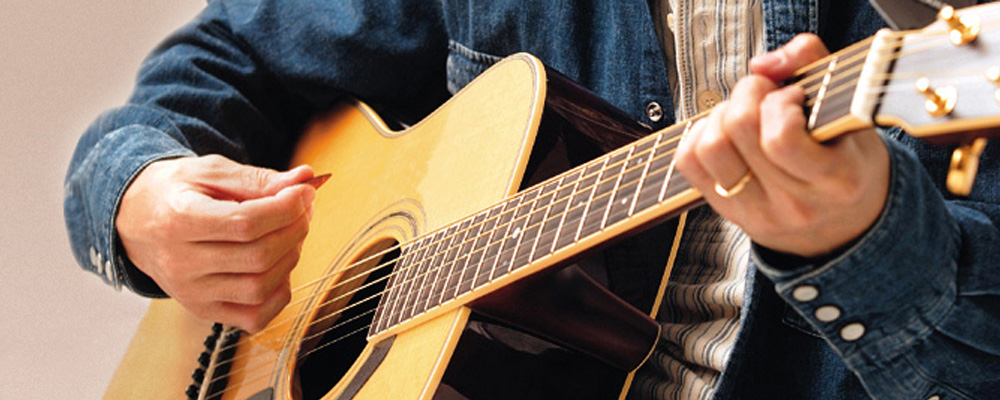
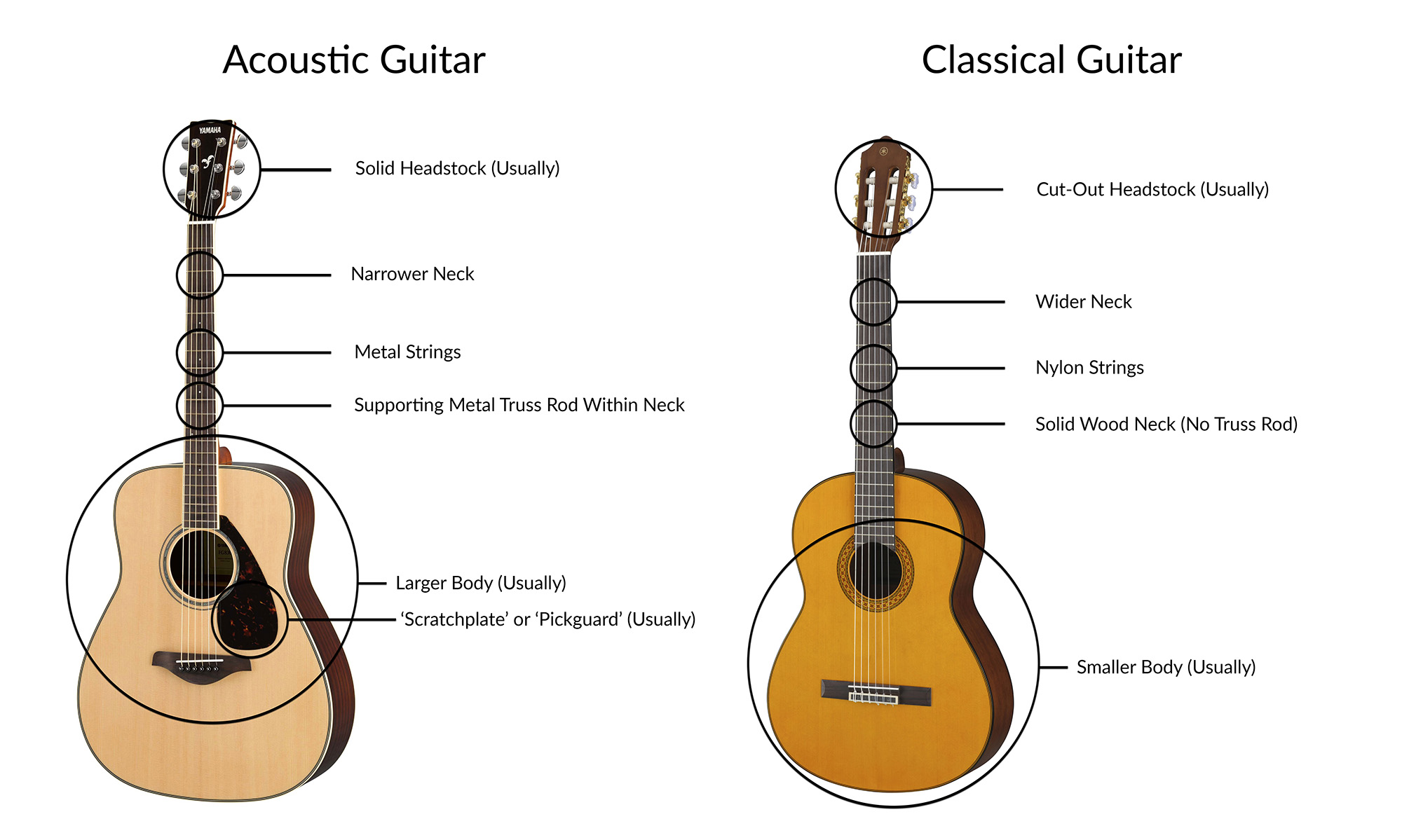
Non-electric guitars generally fall into one of two groups - nylon-strung 'Classical' guitars, usually used for classical and traditional Spanish styles of music, and steel-strung 'Acoustic' guitars - brighter, more powerful and essential for the new generation of singer-songwriters (think Ed Sheeran, Jade Bird and Lewis Capaldi).
The acoustic guitar is a great instrument to play and crosses so many musical boundaries - including Country, Folk, Jazz, Pop, Rock, and world music. Capable of far more than simple strummed chords, it gives huge scope for variety and skill, creating music from bluegrass to acoustic metal.
The rich sound and tonal quality you get from strumming chords and finger-picking is something an electric guitar can’t compete with. How you pluck, slap, pick or strum the guitar is all up to you. It’s your own personality your own touch of your fingers which determines the sound of the guitar. This makes every guitar player different and unique - meaning you can develop your own signature sound.
Go to the beach or the park - somewhere where it’s quiet and peaceful - and behold the simple sound and beauty of the acoustic guitar stripped bare. Find your own sound and style, practise your technique, play some cool licks or a chord progression and develop your playing uninterrupted by daily life.
Relax and make music with friends, family and those around you. Whether your friends also play guitar, play another instrument or simply sing, the acoustic guitar just as suited to collaboration and band work as it is solo performance.
With an acoustic guitar, you’re less likely to be distracted by amps, cables, pedals, cabinets and other equipment; you can just focus on playing and creating. And, if the time comes when you step out onto a stage or into a studio, an electro-acoustic guitar (an acoustic guitar with a built-in pickup system) can still easily connect to a sound system or recording desk.
Acoustic guitars are available in a range of shapes and sizes. Models such as our JR2 offer a rich guitar tone in a physically smaller and shorter body - making them ideal for those with shorter arm spans whilst our full size models (such as our FG and FS Series guitars) offer a choice of either a larger dreadnought body for a powerful, projected tone or slimmer body, for a more focused, detailed tone.
Electro-acoustic guitars generally play and sound like their pure-acoustic cousins - but have the added option of connecting to amps, audio interfaces, PA systems and mixing desks. Meaning you can go from practising in your living room at home to performing at your local open-mic night needing only a cable to connect to the venue's PA system.
With decades of experience making acoustic guitars and with legends such as Paul Simon and Bob Dylan choosing to play Yamaha, our range is the perfect place to find your first guitar. Here are three of our favourites for beginners:

Our F310 is the perfect guitar for anyone completely new to guitar playing. It offers a comfortable body size which is great for younger players (thanks to its slightly reduced body depth and intermediate scale length) [Is this true?]. It also offers excellent craftsmanship at an affordable price, thanks to its laminate spruce top (comprised of several thin layers of spruce wood). In conjunction with the meranti back and sides, the F310 gives a well balanced, responsive tone which is perfect for beginners.
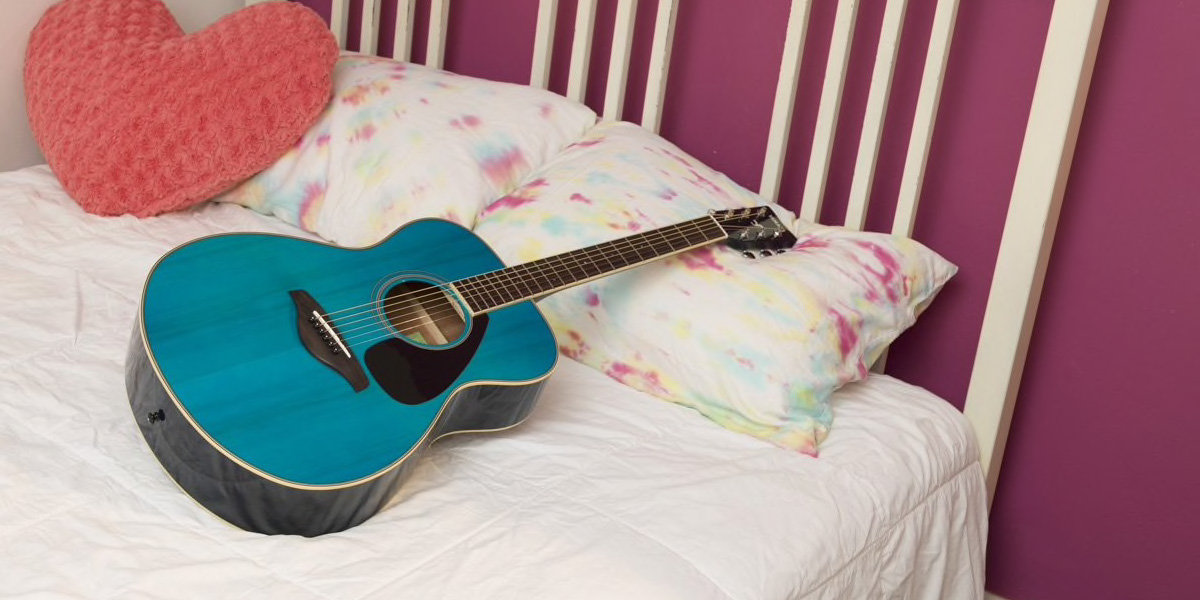
The F310 is a great guitar - but if budget allows, the FS820 offers even more. It features a solid spruce tonewood top (rather than a laminate one) and, as a result, the FS820 sounds innately warmer, richer, more detailed and more powerful.
It’s a great full-size guitar both for those starting out and for those upgrading from smaller beginner models.

There’s something indescribably joyful about playing an acoustic guitar in a large acoustic space. Churches, cathedrals, concert halls and even tube station tunnels all add a rich and completely immersive reverberation to the guitar’s natural sound.
Those rich acoustics aren’t generally available to us at home - and when playing outside in the open air, there are usually no reverberations to speak of, robbing us of that experience.
What if the guitar itself could recreate those acoustics? That was the question we asked ourselves - and the result is the ground-breaking TransAcoustic Guitar. By manipulating and controlling the resonance of the guitar’s tonewoods, TransAcoustic guitars add a rich detailed acoustic environment to the guitar’s tone - or add in a sparkling chorus effect - all without external gear or speakers.
It’s the perfect acoustic guitar - for beginners or veteran musicians.