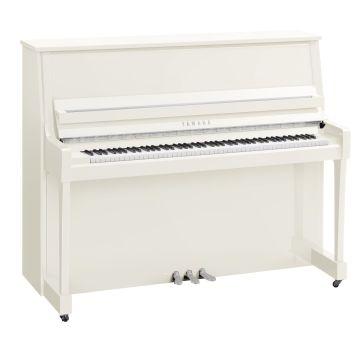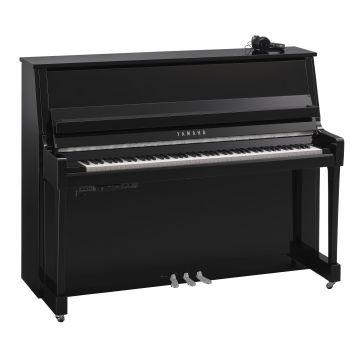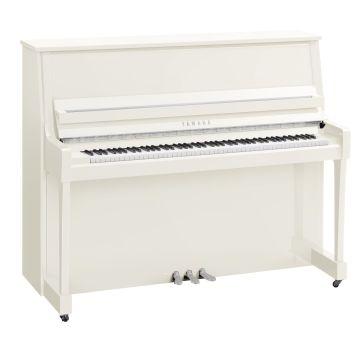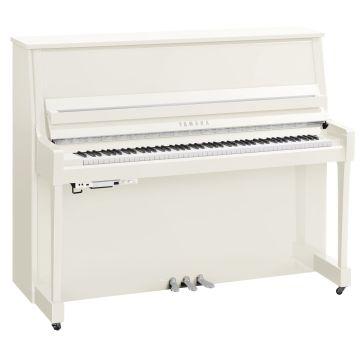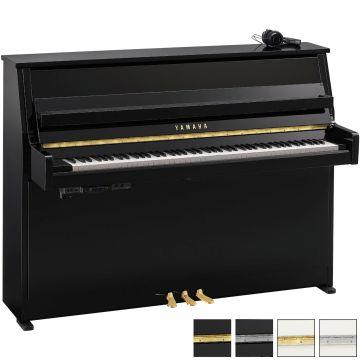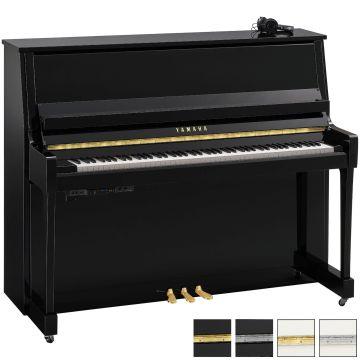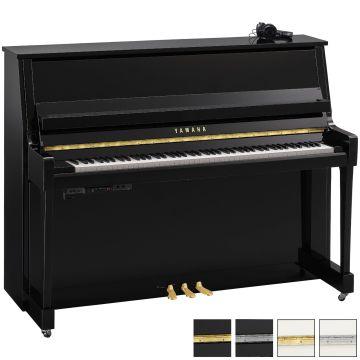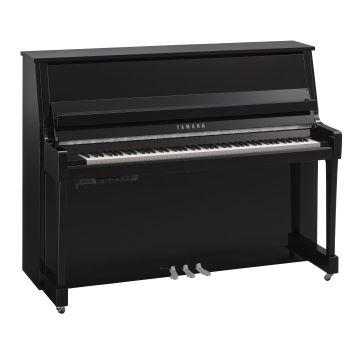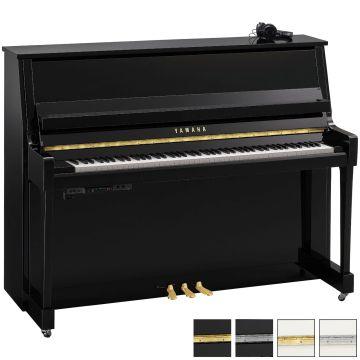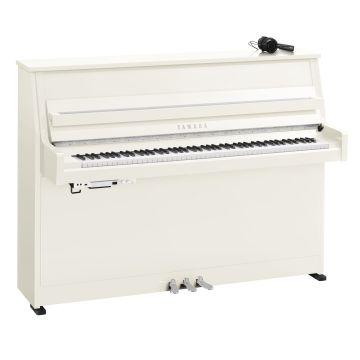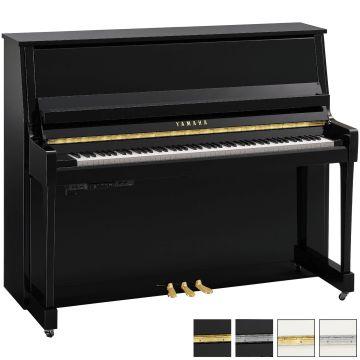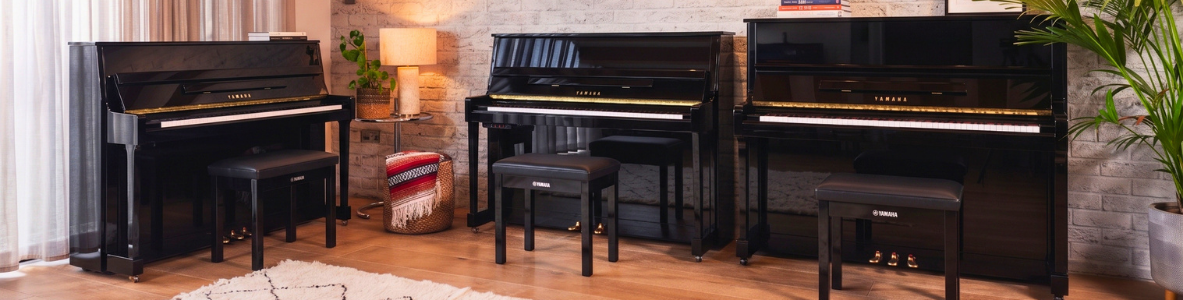
In April 2026, Yamaha replaced its long-running b1, b2 and b3 upright pianos with three new models: the B10, B20 and B30. It's the biggest update to Yamaha's entry-level acoustic range in two decades; new hammers derived from Yamaha's flagship CFX concert grand, a redesigned soundboard, and a reworked cabinet.
This guide covers what's changed, how the B10, B20 and B30 compare, which one suits your space and playing level, and how the Silent and TransAcoustic versions work, so you can choose with confidence.
| B10 | B20 | B30 | |
|---|---|---|---|
| Height | 110cm | 116cm | 121cm |
| Width | 150cm | 153cm | 153cm |
| Depth | 55cm | 58cm | 62cm |
| Weight | 200kg | 220kg | 232kg |
| Best for | Beginners, smaller rooms, first acoustic piano | Progressing players, families, teaching | Advanced players, larger rooms, richer tone |
| Silent version | B10SC3 | B20SC3 | B30SC3 |
| TransAcoustic version | B10TC3 | B20TC3 | B30TC3 |
| Finishes | Polished Ebony, Polished Ebony with Chrome, Polished White, Polished White with Chrome | Polished Ebony, Polished Ebony with Chrome, Polished White, Polished White with Chrome | Polished Ebony, Polished Ebony with Chrome, Polished White, Polished White with Chrome |
The B10, B20 and B30 aren't just a rebrand of the b1, b2 and b3, Yamaha rebuilt the range from the inside out. The core changes are new hammers, a redesigned soundboard, a stronger cabinet, and a taller, more usable music desk.
The most significant upgrade is the hammers: Yamaha applied know-how from the CFX concert grand; its flagship instrument; machining the new B Series hammers to a tolerance of 0.05mm for a more stable, resonant tone. The soundboard construction has also been standardised across the range, using a spruce core with a specialist veneer coating designed to improve resonance even in the more compact B10.
Every B Series cabinet now includes five back posts for improved structural stability, a soft-close fallboard that prevents the lid dropping onto the keys, and a significantly wider music desk that spans almost the full width of the piano, useful for large scores, duets, or propping up a tablet. The cabinet silhouette has also been refined, giving the range a slightly more compact, contemporary footprint than the outgoing b1, b2 and b3.
At 110cm tall, the B10 is the most compact model in the range and the natural first choice for smaller rooms and first-time buyers. It carries the same laminate-and-solid-spruce build quality improvements as the rest of the range, delivering a focused, articulate tone that suits beginners and returning players without compromising on genuine acoustic feel.
The B20 moves to a 116cm cabinet, which allows for a larger soundboard and longer bass strings. The result is a noticeably richer, more resonant sound with greater tonal depth — well suited to progressing players, family homes, and teaching environments where a wider dynamic range helps students develop technique and expression.
The largest of the three at 121cm, the B30 pairs a bigger cabinet with a longer soundboard for the strongest projection and richest bass response in the B Series. It suits more advanced players, larger rooms, and anyone who wants a piano they can grow into over many years without stepping up to a professional-tier instrument.
The right model depends mainly on space, budget and playing level rather than one being objectively "better" than another:
.png)
All three B Series models are available in a standard acoustic version, plus Silent (SC3) and, for the B20 and B30, TransAcoustic (TC3) versions.
Yamaha's SILENT Piano™ system lets you switch between playing acoustically and playing silently through headphones. On the new B Series, the Silent system inherits the same hammer and soundboard upgrades as the standard models, so switching to headphone mode doesn't come at the cost of a lesser acoustic instrument the rest of the time; it's the same touch and tone, with private practice built in.
The main reason to choose a Silent model is flexibility around when and how loudly you can play. If you live with others, practise late at night, or simply want the option of private, headphone-based practice without disturbing the household, the Silent version gives you that without changing the fundamental instrument, you're still playing a genuine acoustic piano with real hammers and strings, just with the option to mute the sound and route it to headphones instead.
TransAcoustic (TC3) goes a step further than Silent. Rather than routing sound to headphones only, it uses the piano's own soundboard as a speaker. Actuators built into the frame project digital sound through the natural wood resonance, so headphone-free digital playback still sounds and feels like it's coming from an acoustic instrument rather than an external speaker. TransAcoustic models also add Bluetooth connectivity, so you can play along with backing tracks or stream audio through the piano itself, and can control volume without losing the natural resonance of the soundboard.
The new B Series is available in four finishes across all three models: Polished Ebony, Polished Ebony with Chrome fittings, Polished White, and Polished White with Chrome fittings. Finish availability can vary slightly by specific model and specification (standard, Silent, or TransAcoustic), so it's worth confirming your exact finish and model combination with our team before ordering.
This is a common question for anyone weighing up the top of the B Series against Yamaha's professional-tier U Series. At 121cm tall, the B30 and the Yamaha U1 are actually the same height, but they sit in different tiers of Yamaha's line-up, and the differences go beyond the spec sheet.
The U1 is built in Yamaha's Hamamatsu, Japan factory. The same facility that produces the CX Series grand pianos, and is positioned as an industry-standard instrument used by conservatoires, teachers and professional pianists worldwide. The B30, part of the newly redesigned B Series, is manufactured at Yamaha's Hangzhou facility as an entry-to-mid-tier instrument that borrows selected technology (like the CFX-derived hammers) from higher up Yamaha's range without matching the U1's full professional-grade construction or price point.
In practice: if you want the most house you can get for the money, or a piano to grow into over the next several years without immediately needing the professional tier, the B30 is an excellent choice. If you're playing at an advanced or professional level already, teaching seriously, or buying for a conservatoire-style setting, the U1 is the natural step up.
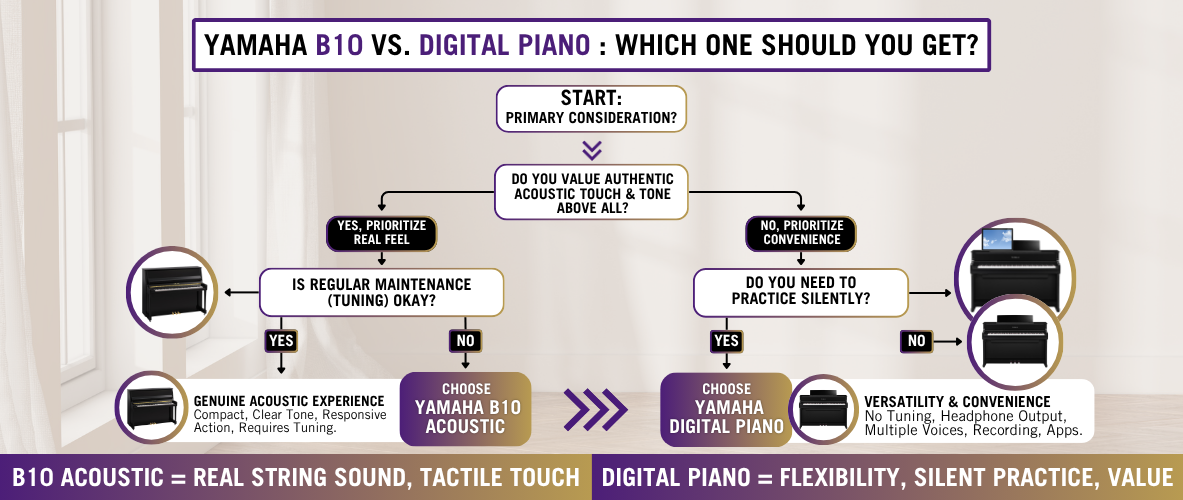
If you're deciding between the Yamaha B10 and a digital piano, the honest answer depends on what you're optimising for.
Choose the B10 (acoustic) if you want the authentic touch, tone and long-term development that comes from real hammers, strings and a resonant soundboard. Acoustic pianos also tend to hold their value well and can last decades with proper care. Choose a digital piano if you need silent practice as standard, want built-in recording, headphone playback or app connectivity without paying for a TransAcoustic upgrade, or need something lighter and easier to move.
It's also worth noting these aren't mutually exclusive across a piano-playing life: many B Series buyers are people upgrading from a digital piano once they're ready for a genuine acoustic instrument, which is one of the most common paths into B Series ownership.
A new acoustic piano is a long-term instrument, and a small amount of ongoing care goes a long way. We'd recommend:
We stock piano stools, care kits and a range of other acoustic piano accessories , including dust covers and floor lamps and metronomes accessories.