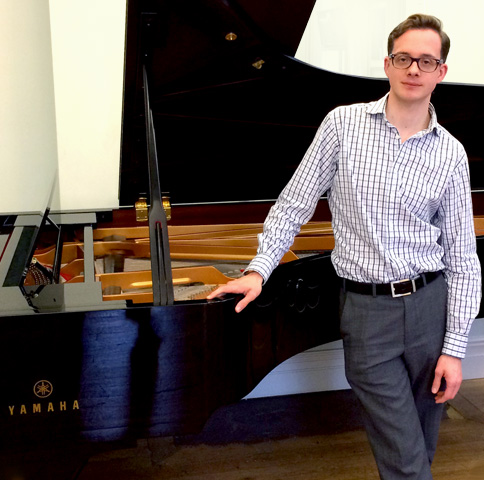
Colin Smithers, pianist and head of the Yamaha Music London Piano Department
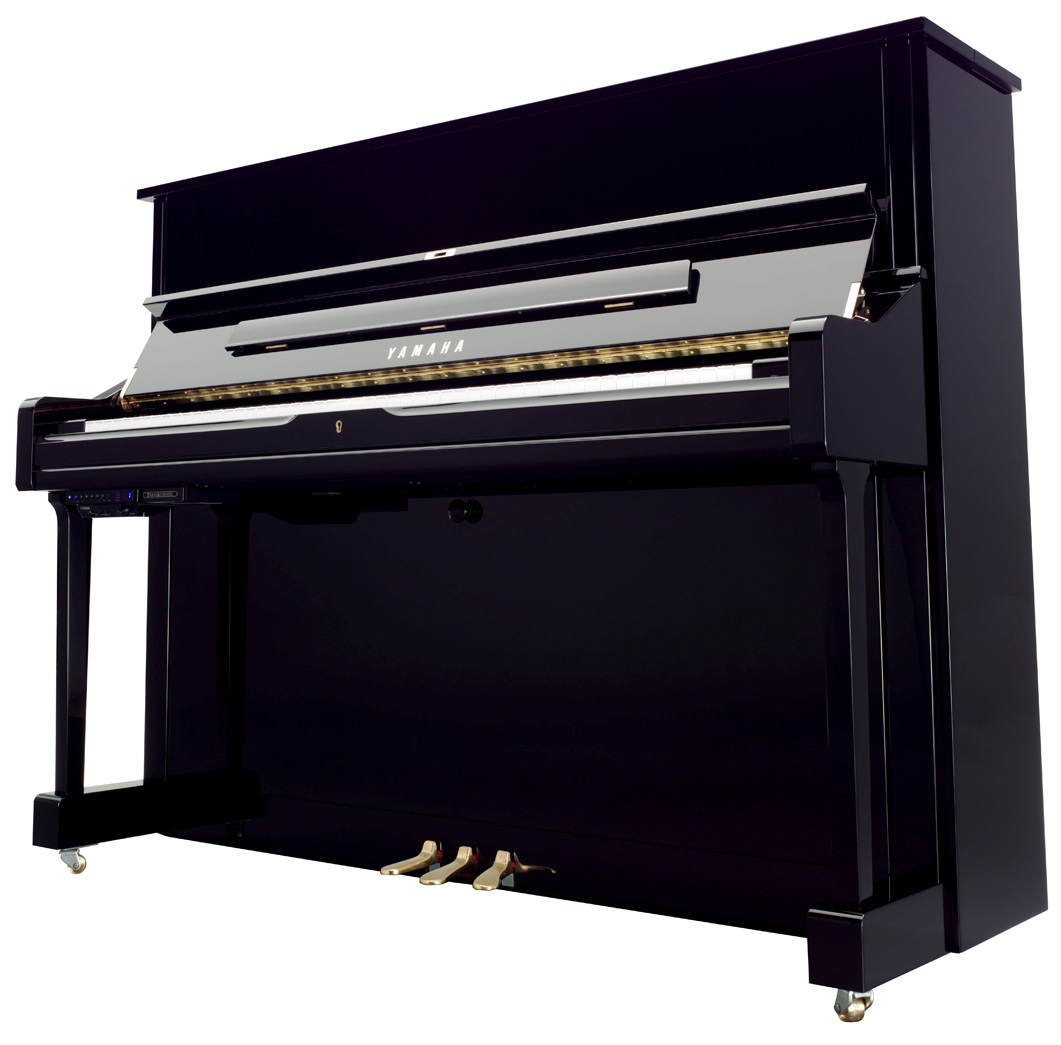
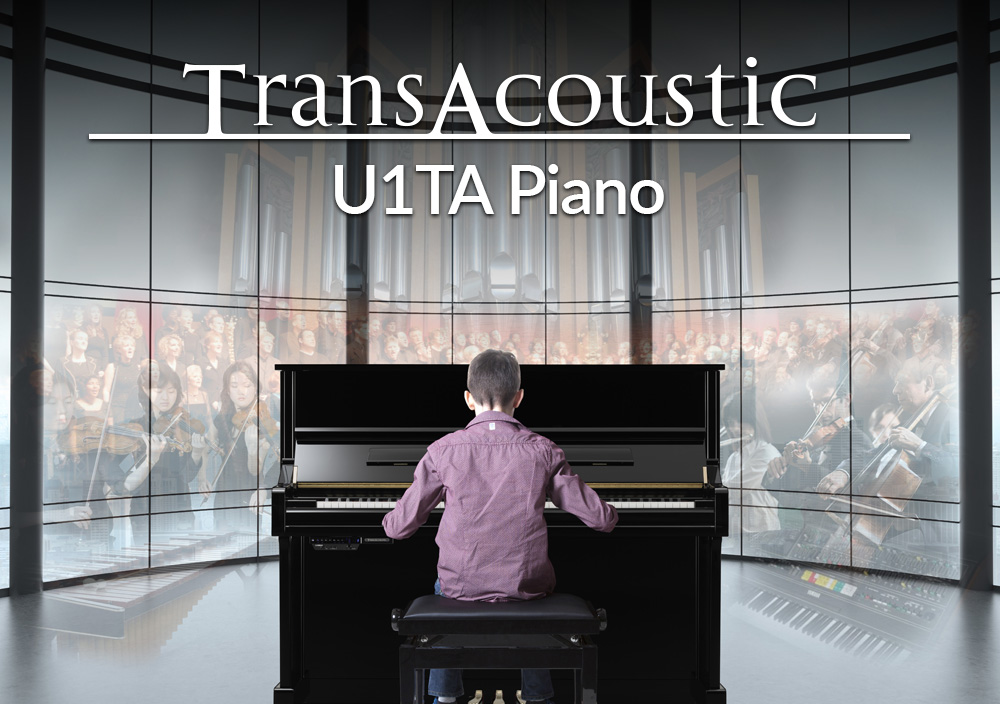
Yamaha U1TA TransAcoustic Piano
Yamaha have made the U1 Upright Piano for many, many years - what makes it special?
"Yamaha’s U1 Upright Piano is one of the most popular pianos ever made, boasting high-end, durable parts throughout (eg the strings, hammers, and spruce soundboard) and, being built by our master piano makers in Japan, preeminent craftsmanship all at a highly affordable price. It offers a rich and colourful tonal palette capable of a wide expressive range, coupled with a professional-grade action that affords amazing keyboard control. This means the U1 is great for just about any level of pianist, from absolute beginners up to advanced players. As with all Yamaha pianos, you can rest assured that the U1 will stay in fantastic condition for decades, no matter how often it’s played."
This particular U1 (the U1TA) features TransAcoustic technology, which itself incorporates Yamaha's Silent technology - firstly, what is Silent technology?
"Silent technology, just one of the features that makes the TransAcoustic U1TA special, offers the player full volume control! If you press down and lock the middle pedal, the piano becomes completely silent - no one will hear a note. All you do then is plug in headphones and start playing – the U1TA has now become a digital piano!
"It does this by preventing the hammers from hitting the strings - crucially, without impeding the action itself so that playing the keys feels exactly the same. The sound coming through the headphones is a high-quality sample, recorded from the world-famous Yamaha CFX concert grand. In fact, due to it using a binaural sample (in which a mannequin is sat in front of the CFX, with recording microphones in each ear) the sound is so realistic that it gives the illusion that you’re not listening through headphones at all! Optical sensors underneath the keys very accurately measure in realtime all the aspects of each key's movement. The TransAcoustic sound engine then faithfully translates that back into sound meaning that, whatever level you're at as a pianist, the U1TA in digital mode will easily respond to all of the many nuances of your playing."
I can imagine there are various times when playing through headphones would be essential...
"Yes; as wonderful as pianos are, there's no escaping the fact that they can, at times, be very loud! And this is great when there’s no one else around to disturb, but this isn’t always the case, whether they’re neighbours or other people in the house. Having a piano with Silent technology gives you much more flexibility, allowing you to practice at whichever hour of the day or night suits you, without worrying about competing with the TV or disturbing others. Of course, you might not always want others hearing you trying to get that scale just right! This can be especially true of children, and it can give them more privacy - allowing them to focus - before they’re have to play publicly."
So the U1TA offers the benefits of headphones which is huge - does Silent technology offer any other abilities?
"In addition to allowing you to use headphones, the U1TA TransAcoustic also lets you change the CFX Piano sound into one of eighteen other voices. These include 3 different electric pianos (such as the Fender Rhodes and Yamaha DX7), a harpsichord, 5 different organs (both tonewheel and pipe), orchestral strings and a choir sound, widening even further the U1TA's expressive potential.
"Also, you can record yourself playing any of these sounds, and can transfer this to a USB memory stick, playing back your recording on a computer or sound system. And if that wasn’t enough, the U1TA Transacoustic has full MIDI capability, meaning that you can connect it directly to a computer and effectively use your piano as a MIDI controller, for example, with notation software such as Sibelius and Notion to score your own compositions whilst you play."
Computer and iPad connectivity opens up a world of apps! So far we've talked about the Silent technology included with the U1TA... But what does the new TransAcoustic technology add or do?
"That's right; everything we've talked about so far is equally true of the U1TA’s cousin, the U1SH Silent Piano. But TransAcoustic technology goes one very significant step further by letting you play all the digital voices through the piano itself - no headphones, monitor speakers, PA or HiFi required!"
No speakers at all?! That sounds impossible...
"When playing a traditional, purely acoustic piano, you're hearing the innate ability of the wooden soundboard to resonate in sympathy to other vibrations (namely the strings). The soundboard's resonance amplifies, enriches and augments the quiet vibrations of the strings immediately after each hammer hits its strings. The soundboard is often referred to as the ‘soul’ of the piano.
"With Yamaha's new TransAcoustic technology, those digital recreations of sounds undergo a translation and modification process before being optimally pushed into the piano’s own soundboard - effectively using the soundboard as a speaker membrane; the piano itself acts as a loudspeaker and so the U1TA TransAcoustic retains that key natural resonance. By using the soundboard in this way, the result is a rich, complex and natural immersive sound, in whatever voice you’re choosing to play."
So Yamaha have developed a way to use an inanimate wooden spruce soundboard as a huge high-fidelity speaker? That's hugely impressive! Obviously, the U1TA is a 'real' acoustic piano at the same time - what are the key advantages of TransAcoustic for everyday players?
"Many people have to practice with some form of volume limit and - unless you're playing a Silent piano - the only way to keep to that limit is to play softly and consciously monitor the volume of your playing rather than how you're playing. So the TransAcoustic system allows you to turn the volume down at will and without the need for headphones.
"Also - when comparing TransAcoustic to Silent technology - because TransAcoustic makes use of the soundboard, the sound produced is higher quality in every respect than it can be through even the highest fidelity headphones.
"One ability of the U1TA TransAcoustic piano (which can’t be done on the U1SH Silent piano), is the combination of both acoustic and digital sounds. With the system turned on, and the middle pedal unlocked, the hammers are given free rein to strike the strings, thus producing a normal acoustic piano tone, but with the digital voices also played through the soundboard - so that both are heard at the same time. With this it is possible to create wonderful combinations, such as strings with the piano, which produces a characteristically scintillating sound.
"Similarly, you can also play audio files through the soundboard – either with a memory stick via the U1TA's USB port, or with an iPod or iPhone plugged through the AUX-IN jack. You could just use it as an immersive hifi, but you can then play acoustic piano over the top; the audio acting as an accompaniment (or your playing accompanying a vocalist on the audio)."
That presumably works in synergy with Yamaha's array of iOS apps?
"Yes, that's right - the ability to play both pre-recorded audio and the piano acoustically through the same soundboard is taken to the next level with the NoteStar app for iPad which contains the sheet music and audio backing tracks for hundreds of songs. You can load hundreds of tracks - reading the music (you don’t even need to worry about turning pages, since this is done automatically!) and playing as part of the band, with all of the other instruments and vocals coming through the piano. Any of the tracks can be muted to allow you to practice before giving a full performance - it's great fun and great practice."
How would you summarise the U1TA TransAcoustic?
"It's a real acoustic piano, built using traditional high-end Japanese craftsmanship, which incorporates cutting-edge digital musical technology - cleverly combining the two aspects in a beautifully organic and natural way with each being augmented by the other. The acoustic side of the piano is enhanced with the addition of a volume control system, allowing practice at any hour, along with the recording and playback functionality mentioned above. And the digital side is fabulously enriched by the natural (wood and metal) parts of the acoustic piano, giving it a dimension never before tapped into in such an effective way."
The Yamaha U1TA TransAcoustic Piano is available now from Yamaha Music London, online and instore.