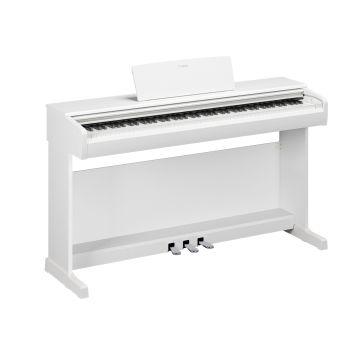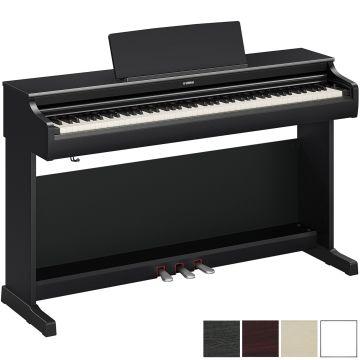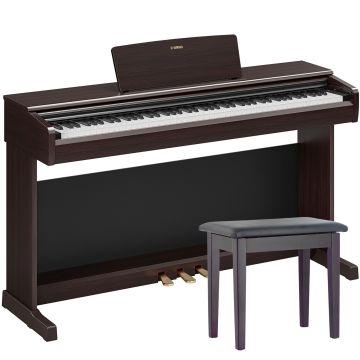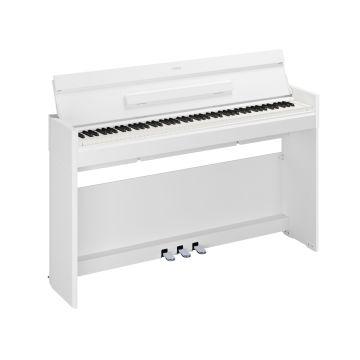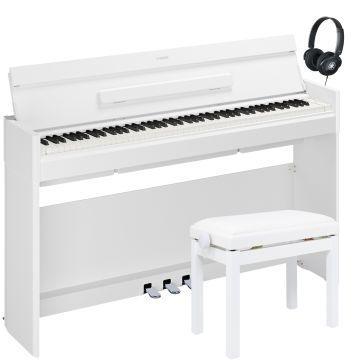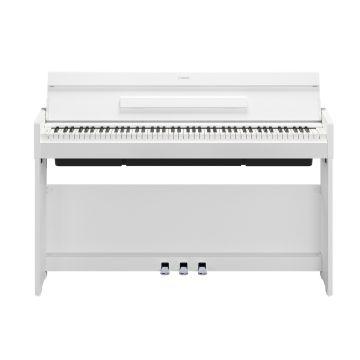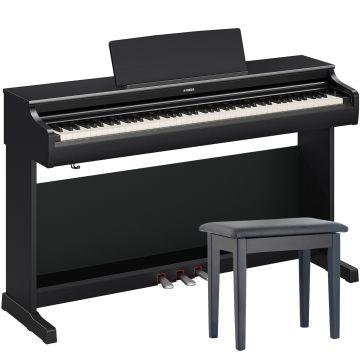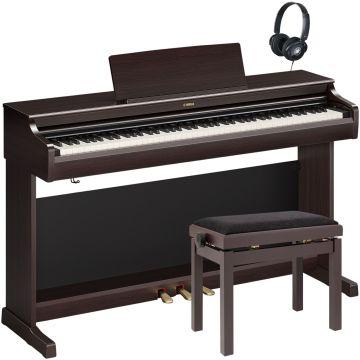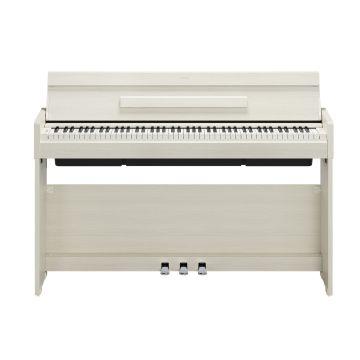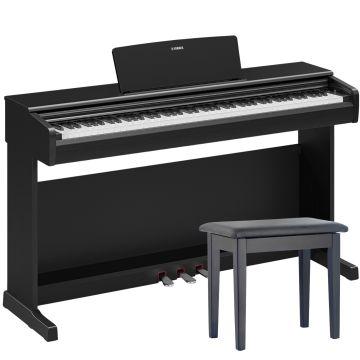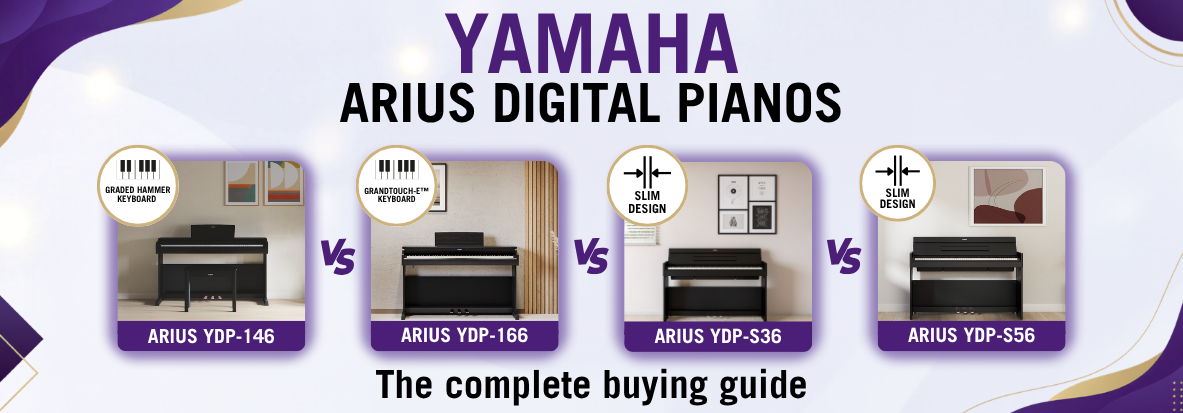
Yamaha has just renewed its entire entry-level Arius range. Here's what's changed, how the four current models compare, and the answers to the questions our Soho showroom team hears most often.
Quick answer
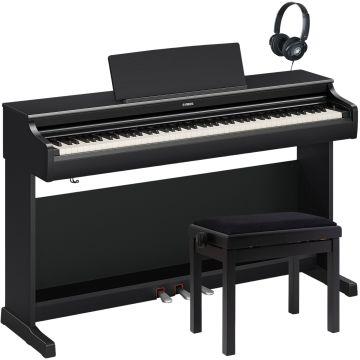
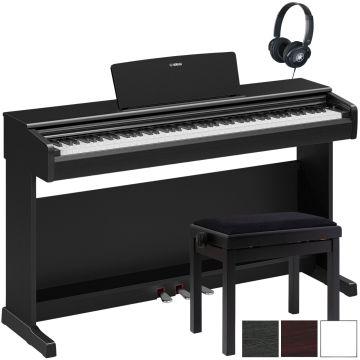
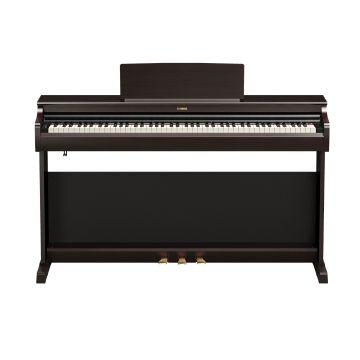
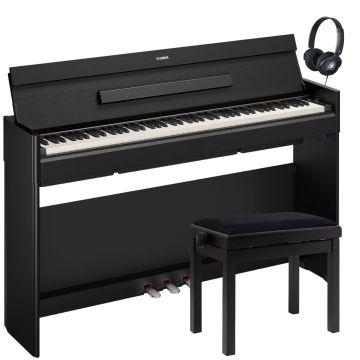
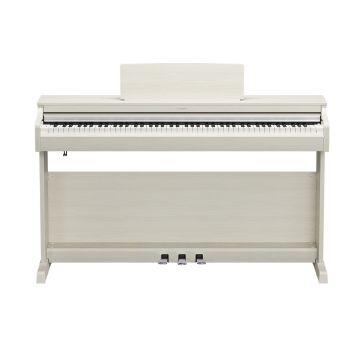
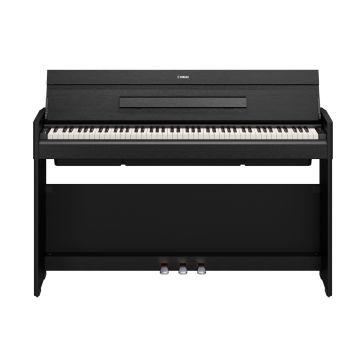
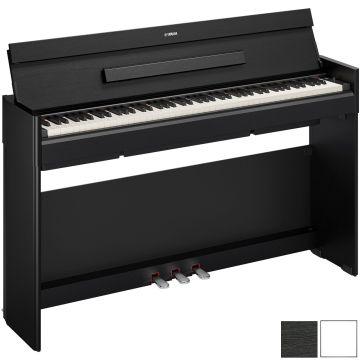
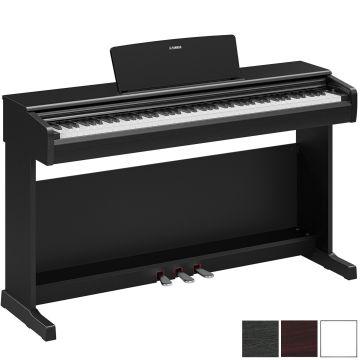
Yamaha's current Arius range has four models: the YDP-146 and YDP-166 in a traditional upright cabinet, and the slimline YDP-S36 and YDP-S56. The 146 and S36 share a GHS keyboard and an 8W x 2 amplifier; the 166 and S56 step up to Yamaha's new GrandTouch-E keyboard action and a 20W x 2 amplifier. All four use the same Yamaha CFX Concert Grand piano sample, 192-note polyphony, and now include Bluetooth Audio and MIDI as standard.
If you've shopped for a Yamaha Arius before, or you've read older reviews online, you may recognise the model numbers YDP-145, YDP-165, YDP-S35 and YDP-S55. Those were the previous generation. In June 2026, Yamaha replaced the entire range with four new models: the YDP-146, YDP-166, YDP-S36 and YDP-S56. This guide covers the current range, and directly answers the questions our team is asked most often on the shop floor at our Soho showroom.
The refresh brings three headline changes across the board. First, every current model now includes Bluetooth Audio and Bluetooth MIDI as standard, so you can stream music through the piano's speakers or connect wirelessly to apps and notation software, this is something the previous generation didn't offer. Second, Yamaha has fitted a newly developed speaker system with diffuser grilles for a clearer, more even spread of sound across the room. Third, and most significantly, the range now splits into two distinct keyboard tiers: an improved GHS action on the YDP-146 and YDP-S36, and an all-new GrandTouch-E keyboard action on the YDP-166 and YDP-S56, replacing the GH3 action used on the previous-generation YDP-165 and YDP-S55.
The core piano sound itself is unchanged in principle – all four current models still sample Yamaha's flagship CFX concert grand – but the touch, connectivity and speaker improvements are genuine upgrades over the outgoing range.
Feature | YDP-146 | YDP-166 | YDP-S36 | YDP-S36 |
| Cabinet Style | Traditional upright | Traditional upright | Slimline | Slimline |
| Keyboard action | GHS (matte black keytops) | GrandTouch-E ( synthetic ebony/ivory keytops, escapement) | GHS (matte black keytops) | GrandTouch-E (synthetic ebony/ivory keytops, escapement) |
| Piano voice | Yamaha CFX Concert Grand | Yamaha CFX Concert Grand | Yamaha CFX Concert Grand | Yamaha CFX Concert Grand |
| Resonance modelling | VRM Lite | VRM Lite | VRM Lite | VRM Lite |
| Polyphony | 192 notes | 192 notes | 192 notes | 192 notes |
| Voices | 10 | 10 | 10 | 10 |
| Amplifier | 8W x 2 | 20W x 2 | 8W x 2 | 20W x 2 |
| Bluetooth Audio & MIDI | Yes | Yes | Yes | Yes |
| Pedals | 3, with half-damper | 3, with half-damper | 3, with half-damper | 3, with half-damper |
| Depth | 422mm | 422mm | 296mm | 309mm |
| Weight | 38kg | 42kg | 37kg | 40kg |
| Replaces | YDP-145 | YDP-165 | YDP-S35 | YDP-S55 |
All four sit below Yamaha's Clavinova range and above Yamaha's portable digital pianos, making Arius the standard step-up for anyone who's outgrown a keyboard and wants a genuine piano-style instrument with a full cabinet, built-in speakers and three pedals.
This is the single biggest decision in the range, and the one our team gets asked about most. GHS (Graded Hammer Standard), fitted to the YDP-146 and YDP-S36, is Yamaha's long-standing entry-level action. It's genuinely weighted, heavier in the bass, lighter in the treble, and gives a solid foundation for learning proper technique, with matte black keytops for a secure grip.
GrandTouch-E, fitted to the YDP-166 and YDP-S56, is new to this generation. It adds synthetic ebony and ivory keytops for a more premium, less slippery feel under the fingers, and crucially an escapement mechanism. Escapement recreates the small mechanical "give" you feel on an acoustic grand piano the instant before a hammer strikes the string, which is one of the more difficult sensations to replicate digitally. It's a genuine step toward acoustic-grand playability, not just a cosmetic upgrade.
Because a keyboard action is one of the hardest things to judge from a spec sheet or a video, this is exactly the kind of decision that's best made by playing both side by side. Our Soho showroom has the full current range set up for exactly that.
Every model in the current Arius range is set up and ready to play in our Wardour Street showroom. There's no substitute for feeling the difference in touch for yourself before you decide.
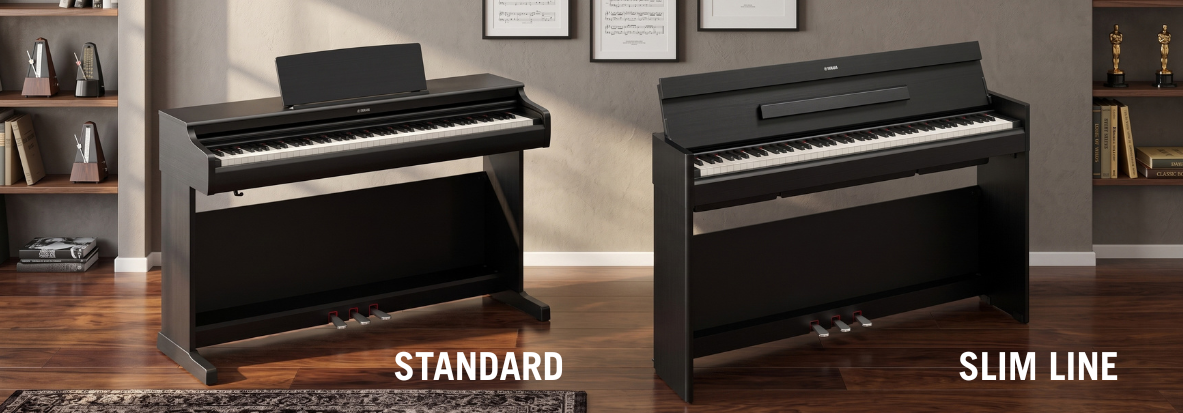
The "S" in YDP-S36 and YDP-S56 stands for the slimline cabinet. Where the YDP-146 and YDP-166 are 422mm deep in a traditional upright style with a sliding key cover, the S-series models measure just 296mm (YDP-S36) and 309mm (YDP-S56) front to back, with a folding lid that lies flat like a console table when closed. They're built for flats, smaller rooms or anywhere a full-depth upright piano simply won't fit. Digitally, the S-series models mirror their standard-cabinet counterparts exactly: the YDP-S36 uses the same GHS action as the YDP-146, and the YDP-S56 uses the same GrandTouch-E action as the YDP-166. The trade-off is cabinet size and slightly lower amplifier power on the entry-tier pair, not sound quality or key action.
Honestly, it depends on what you're prioritising. The two pianos share the same CFX Concert Grand sample, the same VRM Lite resonance modelling, the same 192-note polyphony, the same 10 voices and the same Bluetooth connectivity – the underlying sound engine is identical. What you're paying the difference for is the GrandTouch-E keyboard action with its escapement and ivory-feel keytops, and a considerably more powerful 20W x 2 amplifier against the YDP-146's 8W x 2.
For a first-time beginner, particularly a child, the YDP-146's GHS action is a perfectly genuine weighted keyboard and a sensible starting point. For an adult returning to the piano, someone who's already played an acoustic instrument, or anyone who wants their digital piano to feel as close as possible to a grand piano under the fingers, the YDP-166's escapement action is a meaningful, noticeable upgrade rather than a marginal one. The amplifier difference is also worth factoring in if you're likely to play unplugged in a larger room rather than through headphones.
YDP is widely used across the piano trade to mean Yamaha Digital Piano. It's the model prefix for the whole Arius range, distinguishing it from Yamaha's higher Clavinova pianos, which use the CLP prefix instead. The number that follows broadly indicates the model's position within the current range, and the letter suffix (R, B, WH and so on) denotes the cabinet finish.
Note: this is standard, widely used trade terminology rather than an officially published Yamaha definition, but it's consistent across UK and international Yamaha retailers.
Yes, comfortably. Polyphony is the number of individual notes an instrument can sound at once, including the notes still ringing out under a held sustain pedal. All four current Arius models offer 192-note polyphony, which is more than enough for full piano repertoire, sustained pedal resonance, and layered voices without notes cutting out. If you've seen a lower figure quoted; 128 notes is the one we hear most, that's likely a spec from a much older Yamaha digital piano generation from over a decade ago, not any model currently on our shop floor.
Every current Arius model uses the same source recording: Yamaha's CFX concert grand, a hand-built nine-foot instrument used on concert stages worldwide. Yamaha records multiple velocity layers of the CFX, how the piano sounds played softly through to played very hard, and blends them digitally so the tone changes naturally with how hard you press the key, rather than simply getting louder. On top of the raw samples, Yamaha layers VRM Lite (Virtual Resonance Modeling), which simulates the sympathetic resonance of the strings and soundboard when you hold notes or press the sustain pedal, the subtle "shimmer" that makes an acoustic piano feel alive. It's the same underlying recording technology used across Yamaha's Clavinova range, scaled appropriately for Arius.
This comes up constantly from parents and adult learners alike, so it's worth answering precisely rather than in general terms. According to ABRSM's own published piano exam requirements, a digital piano may be used for Grades 1 through 8, provided it has a clearly recognisable piano tone, a touch-sensitive keyboard with full-size weighted keys, and an action, range and facilities that match a conventional acoustic piano, including a sustaining pedal. Every current Arius model; the YDP-146, YDP-166, YDP-S36 and YDP-S56 meets that specification with its 88 full-size weighted keys and full three-pedal unit.
In practical terms, that means an Arius is a genuinely suitable practice instrument all the way through to Grade 8 and beyond. One nuance worth knowing: exams held at ABRSM's own public venues are usually played on the venue's own upright or grand piano rather than a candidate's home instrument, so your Arius is where the learning and technique-building happens, even if exam day itself is on an acoustic piano provided at the venue. For candidates examined at a private visit, a suitably specified digital piano can be used directly.
This is a genuinely useful comparison, because the top of the Arius range and the entry point of Clavinova sit closer together in price than many people expect. The YDP-166 uses the GrandTouch-E keyboard, a single CFX Concert Grand voice with VRM Lite, and a 20W x 2 amplifier. The Clavinova CLP-825 steps up in several concrete ways: it uses Yamaha's GrandTouch-S keyboard action (a further step up from GrandTouch-E, with a more elaborate escapement and grand-piano-style key structure), samples two concert grands; the CFX and the Bösendorfer Imperial rather than one, runs full Virtual Resonance Modeling rather than the "Lite" version, adds Grand Expression Modeling for more nuanced dynamic control, and offers 256-note polyphony against the Arius's 192.
If budget is the primary constraint and you want the best touch available without stepping outside Arius, the YDP-166 is the one to choose. If you're weighing up whether to stretch to Clavinova from the outset - particularly for a more experienced player, a teacher's home practice instrument, or a "last piano you'll need to buy" purchase, the CLP-825 is worth playing before you decide, and it's set up alongside the Arius range in our showroom for exactly that comparison.
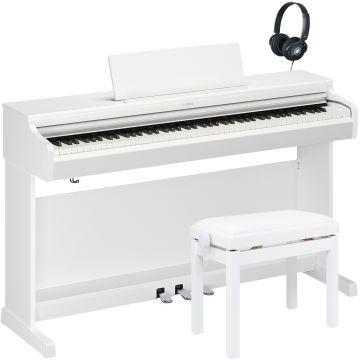
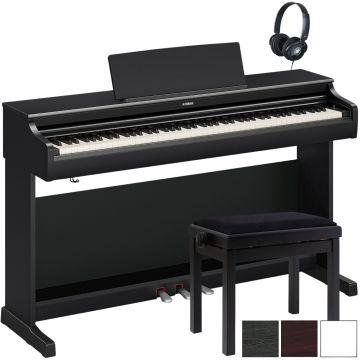
Every model in the current Arius range is available as a bare instrument or as a pack bundled with a matching cabinet finish piano stools and Yamaha HPH-50 headphones; a sensible starting point for anyone setting up a first practice space, since it covers seating and quiet, late-evening practice in one purchase. Beyond the core bundle, we stock a small range of accessories that suit any Arius model:
Ask in-store or check the Arius page for current bundle pricing and availability, as configurations and stock vary by finish.