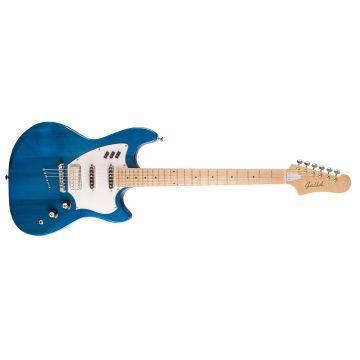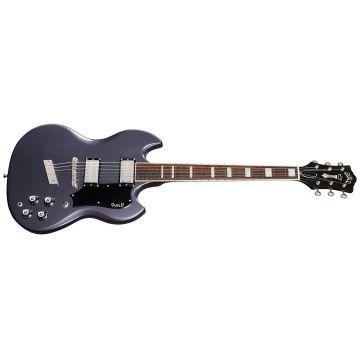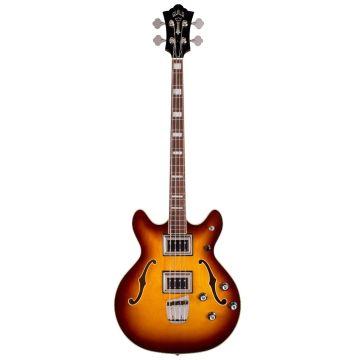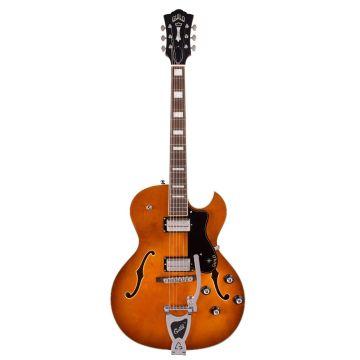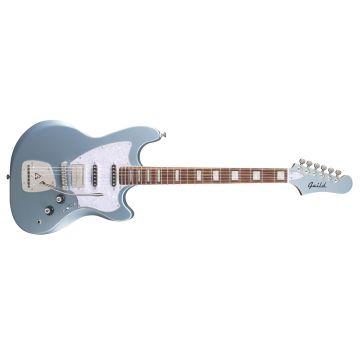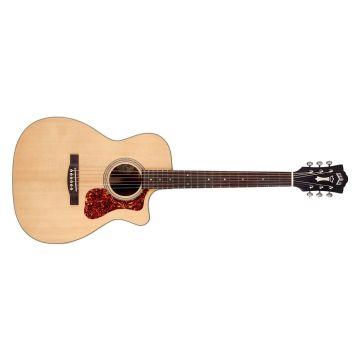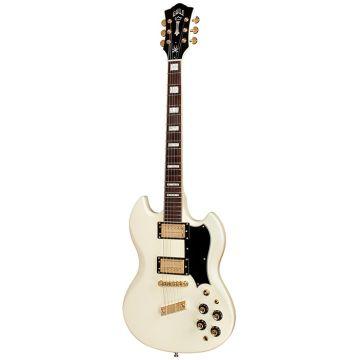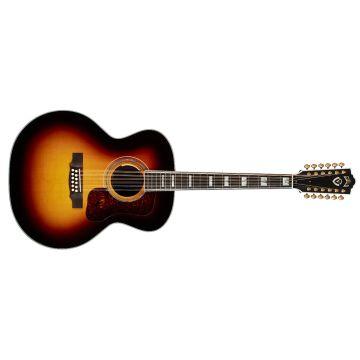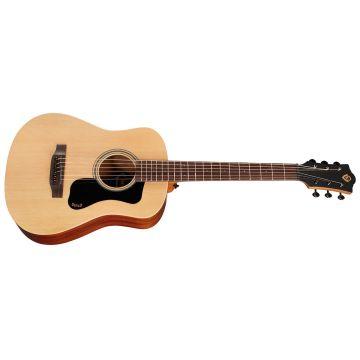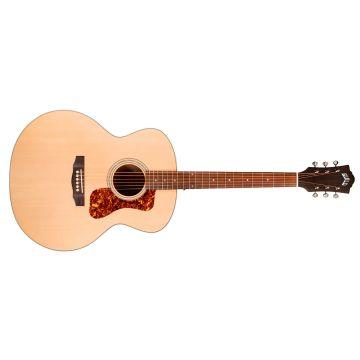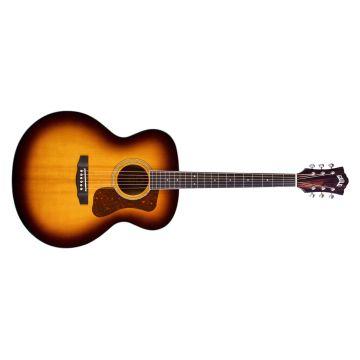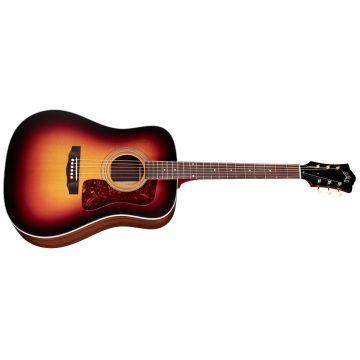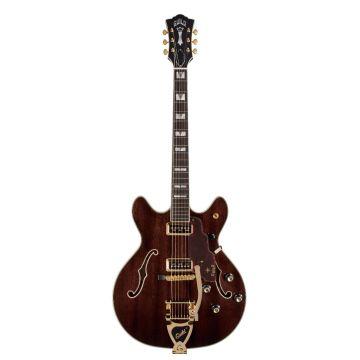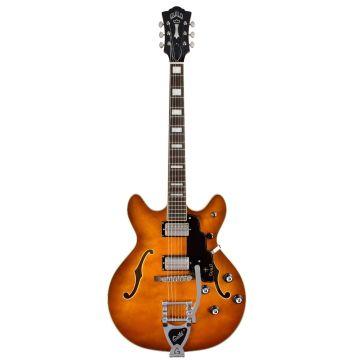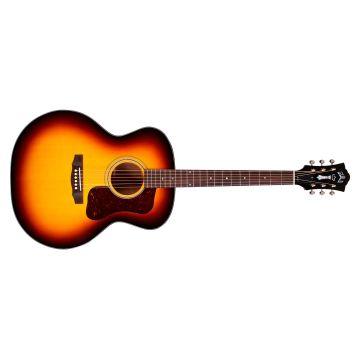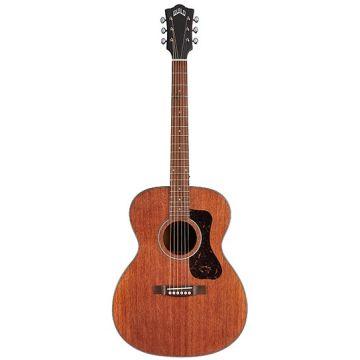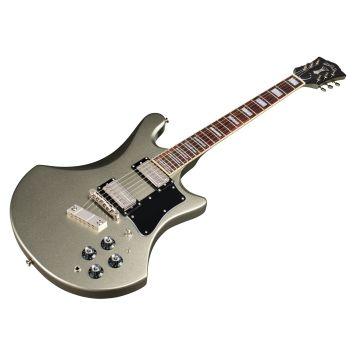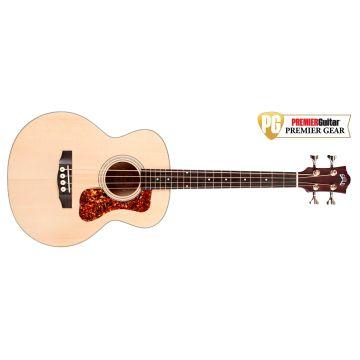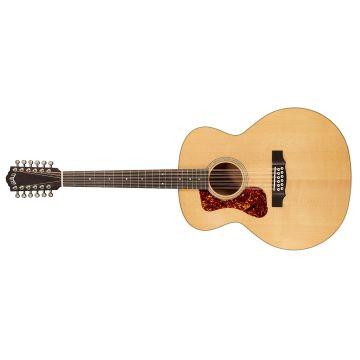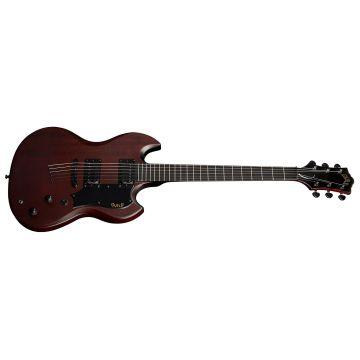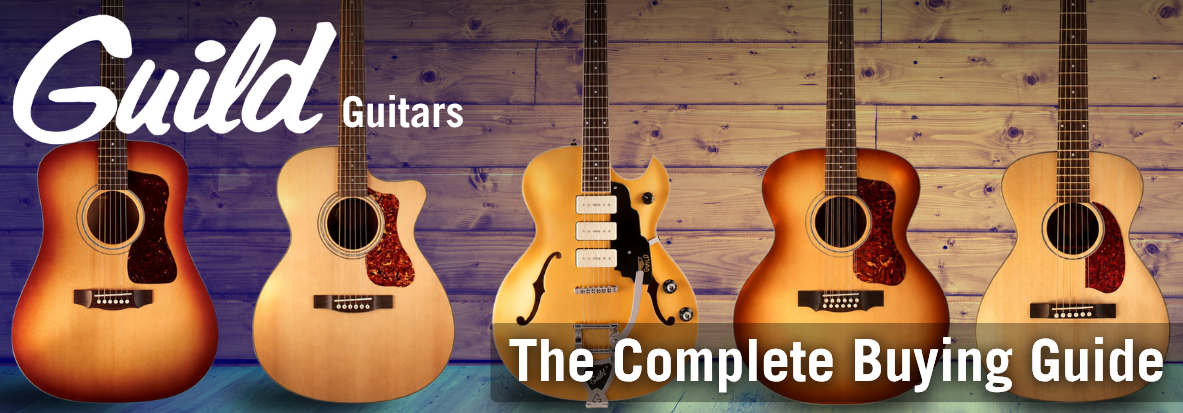
Guild is an American guitar brand founded in New York in 1952, known for powerful dreadnought and jumbo acoustics, historic 12-strings, and vintage-styled hollowbody and solid-body electrics. Guild's parent company has been part of Yamaha Guitar Group since February 2023, but its guitars are still designed and built by Guild's own team, with USA models hand-built in Oxnard, California.
Since Yamaha Music London began stocking Guild guitars in our Soho showroom and online, our team has fielded the same questions from customers again and again about quality, where the guitars are actually built today, which model is "the best," and who's famously played one. Here's the full, properly sourced answer to each.
In this guide:
Guild Guitar Company was founded in Manhattan in 1952 by Alfred Dronge, a guitarist and former music store owner, alongside George Mann, a former Epiphone executive. From the start, Guild drew on experienced luthiers from the Epiphone and Gretsch factories, and by the 1960s its dreadnought and jumbo acoustics; the D-Series and the large-body F-Series had earned a reputation as serious rivals to Martin and Gibson, historically the two biggest names in American acoustic guitars.
That reputation has carried through to today's guitars. Guild's current USA-made acoustics are hand-built at the company's own factory in Oxnard, California, under a production process re-established by luthier Ren Ferguson, formerly of Gibson's Montana acoustic shop. These USA models use solid tonewoods throughout. Guild's more accessible Westerly Collection and Newark St. electric guitars are built overseas to Guild's own specifications and quality control, a similar approach to most established guitar brands' mid-tier ranges and consistently punch above their price point, particularly on tone and build for the money.
This is one of the most-asked questions in our store, since Guild's manufacturing history has moved around more than most brands'; New York, then Hoboken, then Westerly, Rhode Island for over three decades, then Fender-era facilities in California and Connecticut. Here's where things stand today, according to Guild's own current specification:
Guild's parent company, Cordoba Music Group, rebuilt US production from scratch in Oxnard after acquiring the brand in 2014; Guild's American manufacturing had closed in 2014 when Fender shuttered the previous Connecticut facility. As the Oxnard factory has grown, Guild has gradually expanded its USA-made line, including a dedicated Standard Series launched for the brand's 70th anniversary.
Ownership vs manufacturing
No. As with Cordoba, it's worth being precise about the difference between who owns the brand and who actually builds the guitars. Guild joined Córdoba Music Group in 2014, and in February 2023 Yamaha Guitar Group (the US-based guitar division of Yamaha Corporation) acquired Córdoba Music Group in full, bringing Guild into the same corporate family as Yamaha's own guitars, Cordoba, Line 6 and Ampeg.
But Guild guitars are still designed by Guild's own team and built at Guild's own facilities, its Oxnard, California factory for USA models, and contracted factories in China, South Korea and Indonesia for the Westerly Collection and Newark St. ranges. They're not assembled on Yamaha's production lines and don't share components with Yamaha's own guitar range. Same ownership group, separate design and build, exactly the same relationship Cordoba has with Yamaha.
There's no single "best" Guild, it depends whether you're talking acoustic or electric but Guild itself has been consistent about one thing: the D-55 is its flagship dreadnought. First introduced in 1968 as a special-order top-of-the-line model, the D-55 pairs a solid spruce top with solid rosewood back and sides and a distinctive nitrocellulose lacquer finish, and it's been in continuous demand ever since for its rich, balanced tone and note-for-note versatility across strumming and fingerstyle playing.
In Guild's other categories, two models stand out by reputation:
Ask our Soho showroom team which is "best" for you specifically, though the honest answer depends entirely on whether you're chasing dreadnought projection, fingerstyle balance, or an electric with vintage character.

Guild's player history spans genres and generations, and it's a genuinely useful way to understand what the brand is known for:
Guild's naming system is built around body shape, which makes the range easier to navigate once you know the code:
Every model in this range can be tried in person in our Soho showroom before you buy.
Because Guild's body-shape naming maps directly onto tone and playing feel, it's worth understanding the practical differences before you choose:
Shape | Guild code | Feel & tone | Best suited for |
| Dreadnought | D | Big, square-shouldered body; strong bass and loud, all-round projection | Strumming, bluegrass, country, band and stage settings |
| Jumbo | F | Even larger than a dreadnought, rounder body, powerful low end | Players wanting maximum volume, and Guild's famous 12-string models |
| Orchestra | OM | Smaller than a dreadnought, narrower waist, balanced across the frequency range | Fingerstyle, singer-songwriters, players who want comfort over sheer volume |
| Concert/ Parlour | M | Guild's smallest body, compact and light, focused midrange tone | Fingerstyle, smaller players, travel, and anyone who prefers an intimate voice over projection |
Guild's range covers genuinely broad stylistic ground, reflecting 70-plus years of use across folk, country, blues, rock and jazz:
Now that Yamaha Music London stocks both brands, it's a natural question, and the two ranges barely overlap in what they build. Guild is a steel-string specialist; dreadnought, jumbo, orchestra and parlour acoustics plus vintage-styled electrics, rooted in American folk, blues, jazz and rock. Cordoba, by contrast, is a nylon-string specialist; classical, flamenco and crossover guitars rooted in Spanish guitar-making tradition.
If you want a steel-string acoustic with real projection, a historic 12-string, or a vintage-style electric, Guild is the natural fit. If you're drawn to classical, flamenco or fingerstyle nylon-string playing, Cordoba is worth exploring instead. Both are now part of Yamaha Guitar Group, alongside Yamaha's own guitar ranges, so our Soho showroom is genuinely one of the only places to compare all three in person.
Whichever body shape or style you're weighing up, a few accessories are worth adding from day one: a guitar case or padded gig bag sized for your model, a spare set of acoustic or electric strings, and a clip-on tuner. And if a Guild acoustic has you thinking about a smaller, more portable instrument for travel or for a young player in the family, our ukulele range is worth a look too.
Every Guild guitar we stock can be played in person in our Soho showroom on Wardour Street, with our guitar specialists on hand to talk through body shape, tonewood and setup. Before sure to check availability in store before you travel.
Prefer to shop online? We offer free UK mainland delivery and the Yamaha Music London Price Promise.